An activity report is the document that turns a consultant's days into an invoice. Every month, a company that works with external consultants has to collect those days, check them against the mission, get them approved and pay for them, often across many suppliers and missions at once. The activity report, sometimes shortened to AR, sits at the center of that cycle.
When it works, nobody notices. When it doesn't, the cost shows up in three places: payments that arrive late, billing disputes over days nobody can reconcile, and audit questions that nobody can answer with a document. This guide covers what an activity report is, what it includes, how the approval workflow runs and where it usually breaks.
What is an activity report?
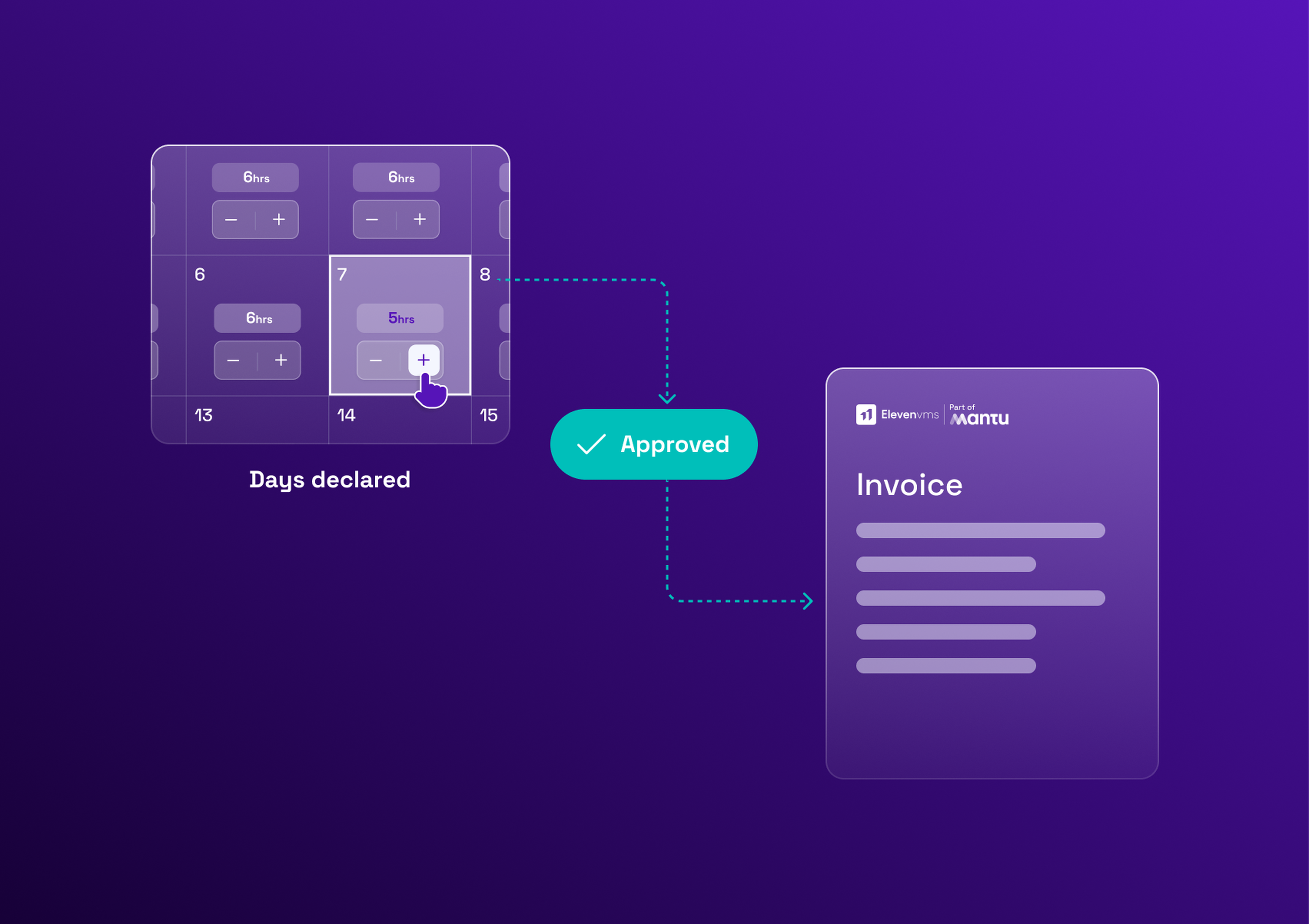
An activity report is a periodic document, usually monthly, in which an external consultant declares the work delivered on a mission: the days worked, the deliverables produced and the expenses incurred. Once the client approves it, it becomes the basis for the invoice and the payment.
A consultant activity report is not an internal progress update. It is a contractual document between a supplier and a client. For time and materials missions, the contract usually states that days are payable only once the client has approved them, which makes the report the link between the consultant's time, the purchase order (PO) and the invoice.
Several people are involved: the consultant who writes it, the supplier that may check it before sending, the business manager who directed the work and approves the days, and procurement or finance, which verify the figures against the PO. Each of them needs a clear role, otherwise the report waits in someone's inbox.
Activity report vs timesheet: what's the difference?
The two terms are often used interchangeably, but they do different jobs.
| Activity report | Timesheet | |
|---|---|---|
Purpose | Declares the work delivered over a period and supports the invoice | Records the time worked, as a log |
Granularity | Monthly summary in days or half-days, with deliverables and expenses | Daily or hourly entries |
Author | The consultant | The consultant or employee |
Approver | The client's business manager, then a check by procurement or finance | A line manager or project lead |
Link to invoicing | Direct: the approved report is the basis for the invoice | Indirect: it feeds the report, or payroll |
Contract type | Time and materials and capped time and materials | Any time-based work, including employment |
In practice, a contractor timesheet can be the daily input from which the monthly activity report is built. What defines the activity report is its status as the approved, contractual basis for invoicing: the timesheet records the time, the activity report commits both parties to it.
What should a consultant activity report include?
A complete report answers every question the approver and the finance team would otherwise have to ask. Nine items cover most missions:
Mission and PO reference. The identifiers that link the report to the contract and the budget it draws on.
Period covered. Start and end dates, so that no day is declared twice or missed.
Units of work. Days or half-days worked, which are the billable days the invoice is based on.
Non-working days. Absences, holidays and unavailability, so the count can be reconciled with the calendar.
On-call and overtime hours. Declared separately, because they are usually priced differently from standard days.
Expenses with receipts. Travel and other costs, each attached to its receipt.
Deliverables attached. What was produced during the period, or a pointer to where it can be found.
Short qualitative comments. Context the approver needs: blockers, risks, changes in scope.
Approver sign-off. Name, date and decision, so the approval is traceable.
Reports without a PO reference or expense receipts are hard to match to anything, which is why finance teams tend to send them back.
How activity reports work for each contract type
What the report has to show, and what it triggers, depends on how the mission is priced.
| Time and materials (day rate) | Capped time and materials | Fixed price (SoW) | |
|---|---|---|---|
What is declared | Days worked and expenses | Days worked and expenses, with consumption against the cap | Milestones reached and deliverables accepted |
What triggers invoicing | Monthly approval of the report | Monthly approval, within the remaining cap | Milestone acceptance |
Main watch point | Days that do not match the PO | Cap reached before the end of the mission | Scope changes and acceptance criteria |
Time and materials (day-rate) missions
The activity report is the contract document. The invoice is the approved days multiplied by the day rate, so every day declared has to be consistent with the PO and the rate card. Choosing between this model and a fixed price is a scoping decision with its own trade-offs, covered in day-rate vs fixed-price engagements.
Capped time and materials
A cap sets a maximum number of days or a maximum budget for the mission. Each approved report adds to the consumption, and alert thresholds warn the business manager before the cap is reached, early enough to request a change rather than discover the overrun at invoicing.
Fixed-price and SoW engagements
Payment follows milestone acceptance rather than days worked, so the activity report no longer drives invoicing. Some clients still ask for it to keep visibility on the team's effort, but the document that matters is the acceptance of each deliverable. SoW-based procurement covers how acceptance criteria and milestones are set up.
The activity report approval workflow, step by step
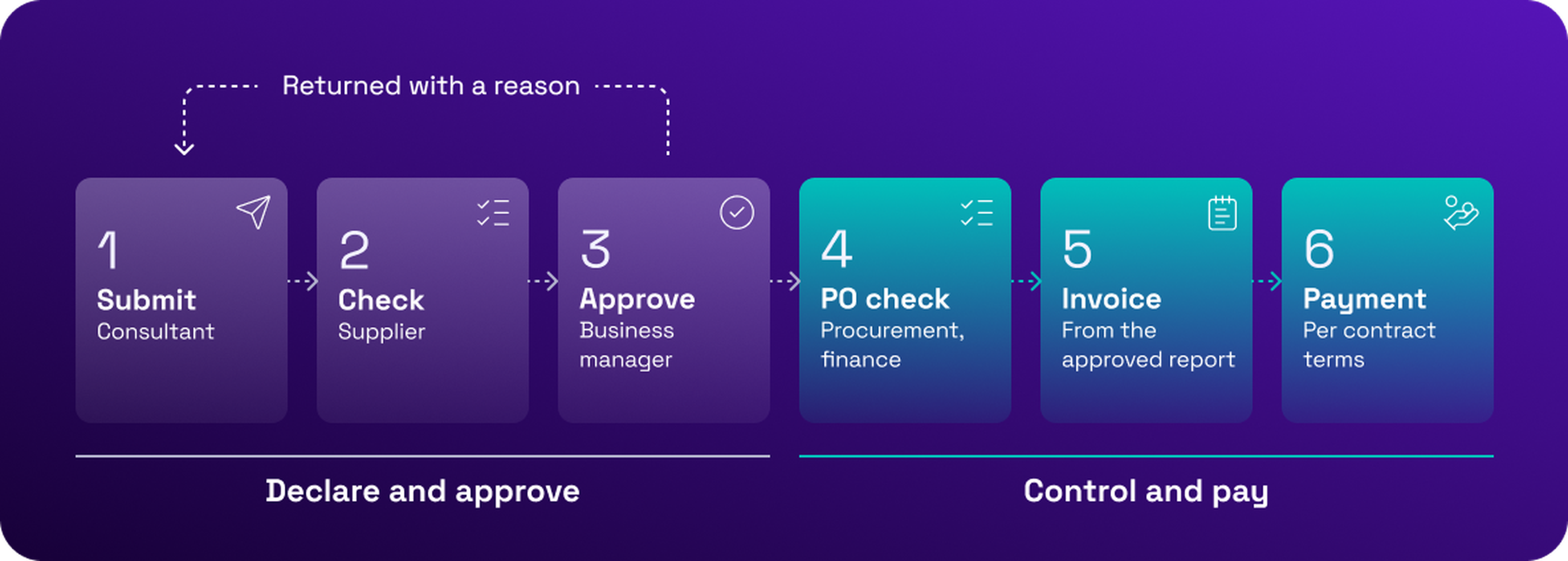
The activity report sits in the middle of the source-to-pay process: it connects the work done to the invoice and the payment. The workflow runs in six steps:
The consultant submits the report for the period.
The supplier checks it, when the contract runs through a supplier, and forwards it.
The business manager approves it, or returns it with a reason for correction.
Procurement and finance check the approved days against the PO and the rate card.
The invoice or self-billing document is generated from the approved report.
Payment follows, within the payment terms of the contract.
A fixed monthly calendar prevents the usual drift. An example, to adapt to each contract:
| Working day | Step | Owner |
|---|---|---|
Day 2 | Report submitted | Consultant |
Day 3 | Supplier check completed | Supplier |
Day 5 | Report approved, or returned with a reason | Business manager |
After approval | Check against the PO, then invoice | Procurement, finance |
The exact days matter less than the fact that they are written down, shared with consultants and approvers, and tracked. Timesheet approval with a deadline gets done; approval without one waits.
Common activity report problems (and how to avoid them)
Most delays trace back to six situations, each with a simple fix:
Late submission. Reminders before the deadline and a visible cut-off date, so the missing report is not discovered at invoicing time.
Approvers who don't respond. A named backup approver, and an escalation after a set delay.
Days that don't match the PO. An automatic check of declared days against the PO and the remaining budget at submission, rather than at invoicing.
Missing expense receipts. Receipts required at submission, so an incomplete report cannot be sent.
Rejections with no reason. A mandatory comment on every rejection, so the correction takes one round instead of three.
Consultants disputing the figures. The approved report as the single reference, with any later correction recorded as a tracked amendment.
Timesheet validation works best when these checks happen at the moment of submission, not at the moment of payment.
Activity reports as audit and compliance evidence
An approved activity report is a record that someone with authority checked the days, the deliverables and the expenses before the invoice was paid. That makes it useful in three situations:
Proving delivery, when a supplier or an auditor asks what was paid for.
Controlling the budget, since approved days are the actual consumption against the PO.
Showing how the engagement is run: a consistent record of days, deliverables and approvals fits a supplier relationship, while gaps and informal records weaken that picture.
It is one piece of evidence among others: how the work is directed, its duration and the consultant's integration in the team matter as much. Contractor compliance covers these tests in detail. This is general information, not legal advice, and requirements vary by country.
How a vendor management system automates activity report management
A vendor management system turns the monthly cycle into a routed, tracked process instead of a chain of emails and spreadsheets. In practice, it provides:
automatic reminders before submission and approval deadlines
approval routing to the right business manager, with a backup approver
checks of declared days against the PO and the rate card
an invoice or self-billing document generated from the approved report
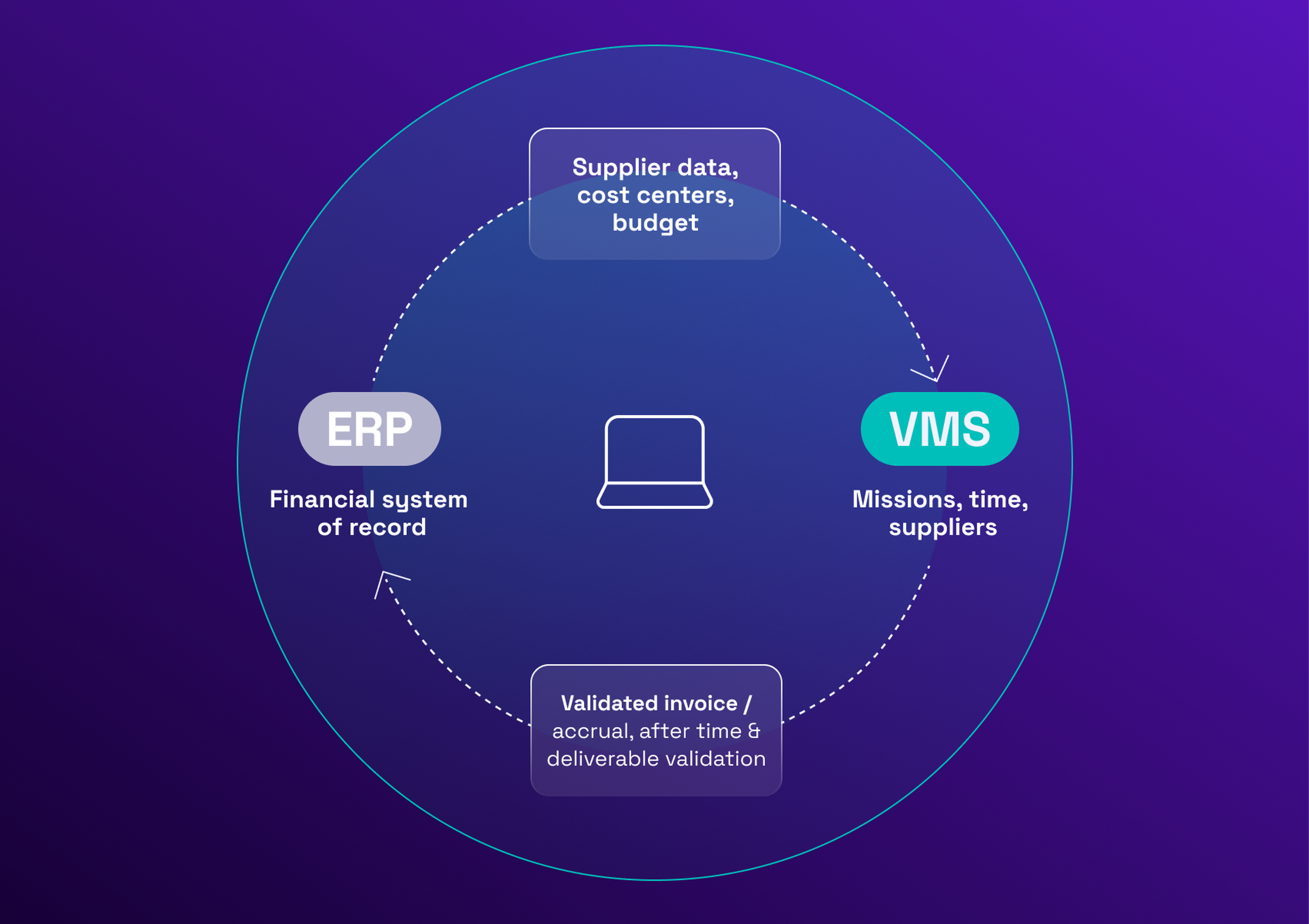
synchronization with the ERP and the HR system
dashboards on submission and approval status across missions
The effect is visible at customers that have moved this process into the platform. At Inetum, automating timesheet approval was one of the stated objectives of the project. The reported results include more secure timesheet validation and stronger compliance, as well as the exclusion of prior timesheets and duplicate management and time savings thanks to fewer manual exchanges.
From a monthly chore to a controlled cycle
A clear report format, a fixed calendar and named approvers resolve most of the delays described above. A platform keeps them running when missions and suppliers multiply.
Book a meeting with one of our experts for a personalized demo.