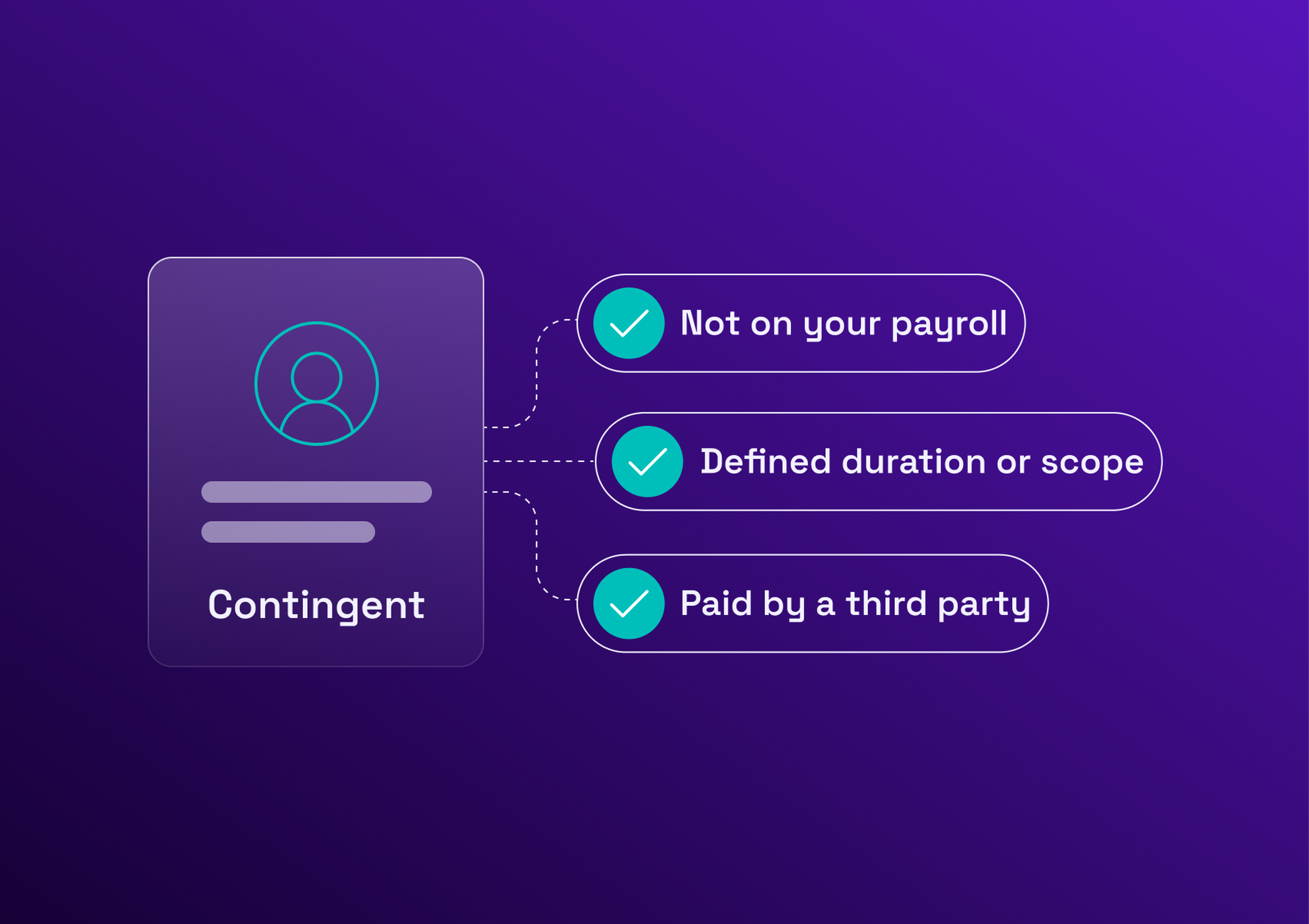
Worker misclassification is when an organization treats someone as an independent contractor or supplier resource when the law would treat them as an employee, based on how the work actually happens, not what the contract says. For most large enterprises, the exposure isn't direct freelancers hired one at a time, it's contractors and consultants sent by suppliers: a staffing agency placement, a consulting-firm resource, a long-running time-and-materials engagement that quietly drifted into looking like employment.
What is worker misclassification?
Worker misclassification happens when the legal test for employment status, control, integration, duration, dependency, says employee, while the paperwork says independent contractor or supplier-placed resource. Courts and regulators look through the label to the actual working relationship.
It generally takes one of three forms:
An employee treated as an independent contractor. A worker engaged directly, outside payroll, performing work that in practice matches an employee's role.
A supplier's consultant who in practice works as your employee. Disguised employment or unlawful labor lending, where the contract is with a supplier firm, but the individual is directed, scheduled and integrated exactly as your own staff would be.
Wrong exempt or non-exempt status. A separate classification question, whether an employee qualifies for overtime, distinct from contractor misclassification and outside the scope of this guide.
The second form is where most enterprise exposure actually sits, and it's the one general misclassification guidance rarely addresses.
Why enterprises are exposed through their suppliers
The Economic Policy Institute's most recent analysis puts the figure at 10 to 30% of employers misclassifying at least some workers, citing a National Employment Law Project analysis of state-level reports. The pattern behind that figure is consistent enough to be almost a template. A consulting contract starts as a defined, time-and-materials engagement. The consultant performs well, so the engagement gets renewed, then renewed again, past one year, then two or three. Somewhere in that extension, the working relationship shifts: the consultant takes instructions directly from your managers rather than their own firm, gets a company email address and sometimes a badge, sits in your team's standups, and has no other active clients because the engagement has become effectively full-time. None of that was decided deliberately. It accumulated.
None of these signals requires bad intent to trigger legal exposure. A contract can be entirely well-meaning and still fail the underlying test if the working relationship, in practice, looks like employment. This is exactly the risk profile of contingent workforce compliance generally, and it applies with particular force to staff augmentation contracts specifically, where direction and integration are the whole point of the engagement, right up to the line where it becomes a legal problem. Services procurement structured around deliverables rather than hours carries meaningfully less of this exposure, which is part of why the distinction matters operationally, not just legally. Whether suppliers are managed directly or through a managed service provider, the drift happens the same way: an MSP standardizes the paperwork, but it doesn't change the underlying test a regulator applies to the working relationship itself.
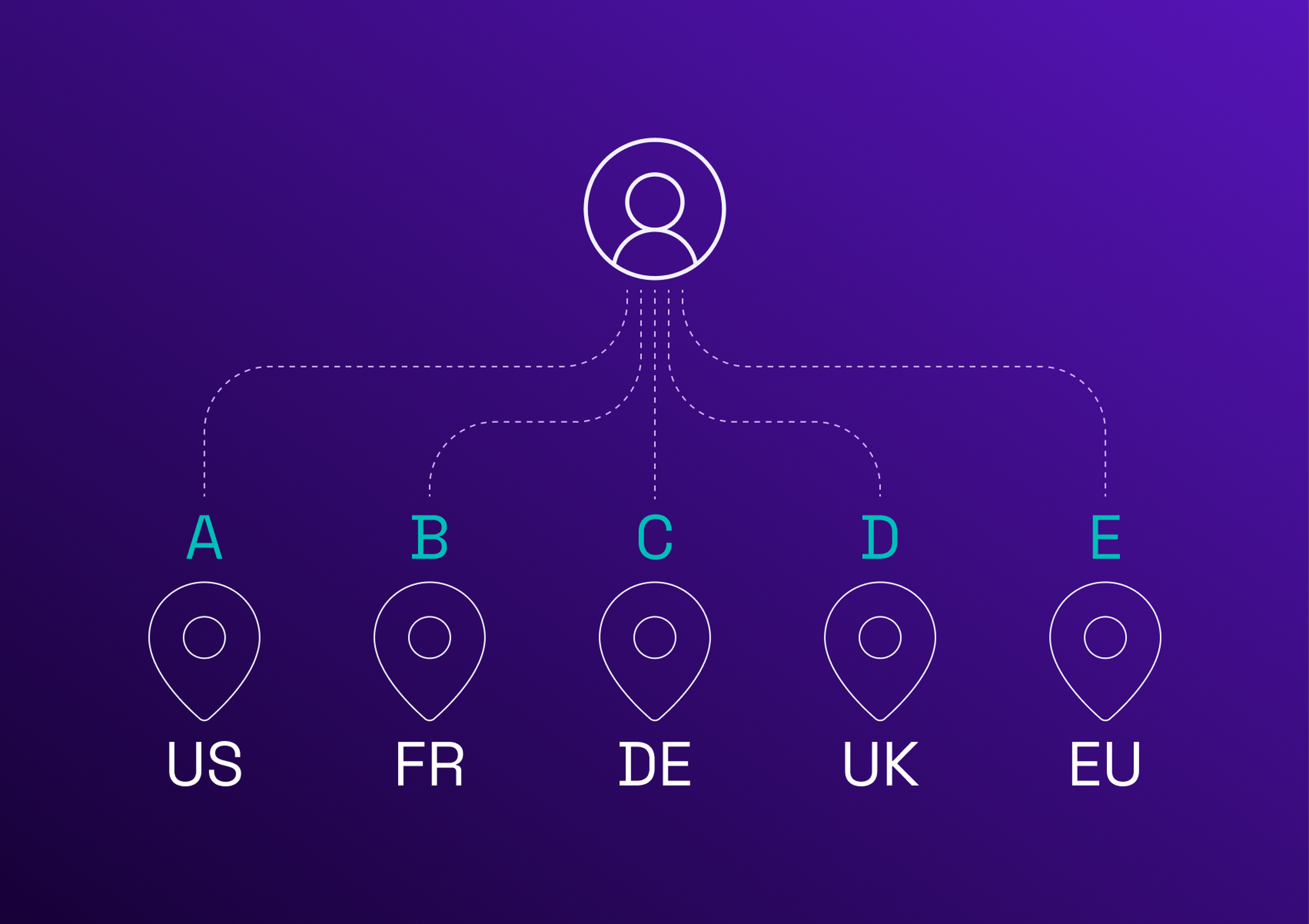
How worker classification is tested by country
Regulators test for this differently by jurisdiction, but the underlying question, does the working relationship look like employment regardless of the contract's label, is consistent across all of them.
| Jurisdiction | Test or law | Who carries the burden | Key red flags |
|---|---|---|---|
US federal (DOL) | FLSA economic reality test; 2026 proposed rule reinstates two core factors | Employer | Control over the work, limited opportunity for profit or loss |
US federal (IRS) | Common-law test: behavioral, financial, relationship factors | Employer | Degree of control over how work is performed |
California | ABC test (AB5) | Employer | Work performed within the business's usual course of business |
UK | IR35 off-payroll rules | The client, which issues the Status Determination Statement | Control, right of substitution, mutuality of obligation |
France | Requalification, unlawful labor lending (prêt de main-d'œuvre illicite), illegal labor supply (délit de marchandage) | Judge-led facts test | Subordination, a supplier with no genuine expertise of its own |
Germany | Disguised self-employment; agency worker leasing law (AÜG) | Pension authority status check | Integration into the organization, leasing beyond the 18-month cap |
EU | Platform Work Directive, national transposition due by December 2, 2026 | Platform, under a rebuttable presumption of employment | Direction and control by the platform |
United States: the DOL's 2026 proposed rule and the IRS test
On February 26, 2026, the Department of Labor proposed rescinding the 2024 independent-contractor rule, reviving a version of the 2021 economic reality test and giving particular weight to two "core" factors: the degree of control over the work, and the worker's opportunity for profit or loss based on their own initiative or investment. As of this writing, the rule remains a proposal, not yet finalized, worth rechecking before relying on it. Separately, the IRS applies its own common-law test, grouping evidence into behavioral control, financial control, and the type of relationship, and courts have relied on it for decades independent of whatever the DOL's current rule says.
UK: IR35 and Status Determination Statements
Since 2021, medium and large UK clients must issue a Status Determination Statement for each contractor, a formal determination of whether the engagement falls inside or outside IR35. Get that determination wrong, and liability for the resulting tax and National Insurance shifts to the client, not the contractor.
H3 France and Germany: disguised employment through service contracts
In France, Article L8241-1 of the Code du travail prohibits unlawful labor lending (prêt de main-d'œuvre illicite), while Article L8221-1 covers travail dissimulé more broadly, including disguised salaried employment. A judge weighs the facts: subordination, and whether the "supplier" brought any genuine expertise of its own or simply supplied a body. In Germany, disguised self-employment (Scheinselbstständigkeit) follows a similar logic, and the Arbeitnehmerüberlassungsgesetz (AÜG) caps commercial employee leasing at 18 consecutive months to the same client, a limit introduced in the law's 2017 reform and confirmed across current legal guidance on the statute.
EU Platform Work Directive: why it matters beyond gig platforms
Directive (EU) 2024/2831, due in national law by December 2, 2026, introduces a rebuttable presumption of employment where facts indicate direction and control. It's written for digital labor platforms specifically, but the control-based reasoning behind it reflects where EU regulatory thinking on classification is heading more broadly, worth watching even for buyers whose exposure sits in consulting and IT services rather than platform work.
What are the penalties for worker misclassification?
Consequences stack rather than substitute for each other:
Back taxes and interest, assessed from when the relevant tax was originally due, not from when the error was discovered.
Back wages and benefits, if the worker was entitled to overtime, leave or benefits as an employee.
Fines per worker. In California, Labor Code § 226.8 sets willful misclassification penalties at $5,000 to $15,000 per violation, rising to $10,000 to $25,000 per violation for a pattern or practice.
Criminal liability, a real possibility in France for the most serious cases of unlawful labor lending or illegal labor supply.
Class actions. Misclassification claims scale naturally into collective litigation once one worker's situation turns out to match hundreds of others.
Reputational damage, particularly where enforcement or litigation becomes public.
Two cases illustrate the range. Vizcaino v. Microsoft settled for roughly $97 million in 2001, after the IRS determined Microsoft's long-term "permatemp" contractors should have been treated as employees; the settlement included converting thousands of contractors to regular employee status. Van Dusen v. Swift Transportation settled for $100 million in 2019, covering roughly 20,000 drivers classified as independent contractors. Neither company intended to build a nine-figure liability. Both did, gradually, through engagements that extended and deepened without the classification question being revisited.
What is co-employment risk?
Co-employment risk is the exposure a company takes on when it directs a supplier-placed worker so closely that courts or regulators may treat it as a joint or sole employer, regardless of which entity issues the paycheck. It's closely related to misclassification, same underlying facts, usually a different legal theory, and it extends further: co-employment claims can reach companies that never intended to be anyone's employer, simply because of how closely they managed the work day to day. In the US, the DOL's broader 2026 proposals also touch joint-employment standards, worth watching alongside the independent-contractor rule itself since the two doctrines often get litigated together.
Worker misclassification red flags in your supplier base
Any one of these, on its own, may be nothing. Several together, especially sustained over time, are the pattern regulators and courts look for.
the same consultant renewed for 18 months or more without the engagement being re-scoped
no defined deliverables in the statement of work, just time billed
a company email address, badge, or inclusion in internal org charts
exclusivity, no other active clients during the engagement
a day rate billed with no link to any specific output or milestone
fixed hours set by your team rather than the contractor
close day-to-day supervision indistinguishable from managing an employee
the individual, not the supplier firm, holds the actual working relationship with your managers
company equipment, tools or systems used as if the person were staff
performance reviews conducted the same way as for employees
integration into internal reporting lines or team structures
no commercial negotiation left in the relationship, renewal happens by default
How to prevent worker misclassification: controls for each risk factor
Each legal test factor maps to a specific, checkable control, which is what turns "be careful about this" into something a procurement function can actually operationalize. That is the practical core of contingent workforce compliance.
| Risk factor | Procurement control | How a VMS enforces it |
|---|---|---|
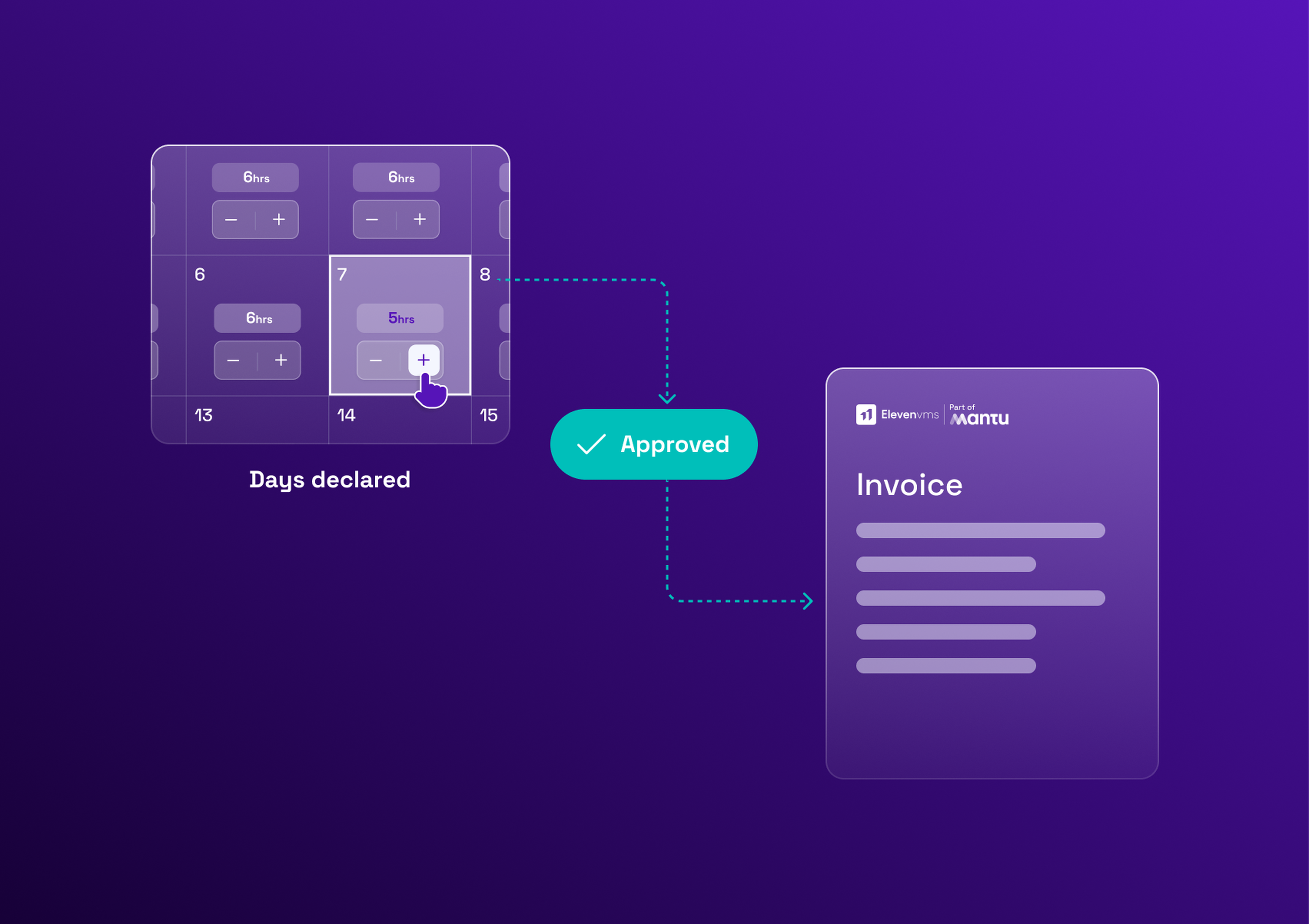
Control | Statement-of-work deliverables instead of day-to-day manager instructions | Tracks milestone acceptance rather than hours worked |
Duration | A defined engagement length with renewal requiring explicit approval | Mission-length alerts and a renewal approval workflow, not silent auto-continuation |
Integration | Onboarding rules that distinguish contractor access from employee access | Access, email and badge provisioning tracked separately by worker type |
Exclusivity | Visibility into whether the supplier has other active clients | Supplier profile data flags single-client dependency |
Pricing model | Fixed price or milestone billing where scope genuinely allows it | Rate card and pricing-model data tracked per engagement, not just per supplier |
Documentation | A central, auditable store of contracts and compliance documents | One repository for contracts, IR35 Status Determination Statements, and other compliance records, rather than scattered files |
Ownership | A single approval workflow spanning HR, procurement and legal | Workflow routes classification decisions through all three rather than any one acting alone |
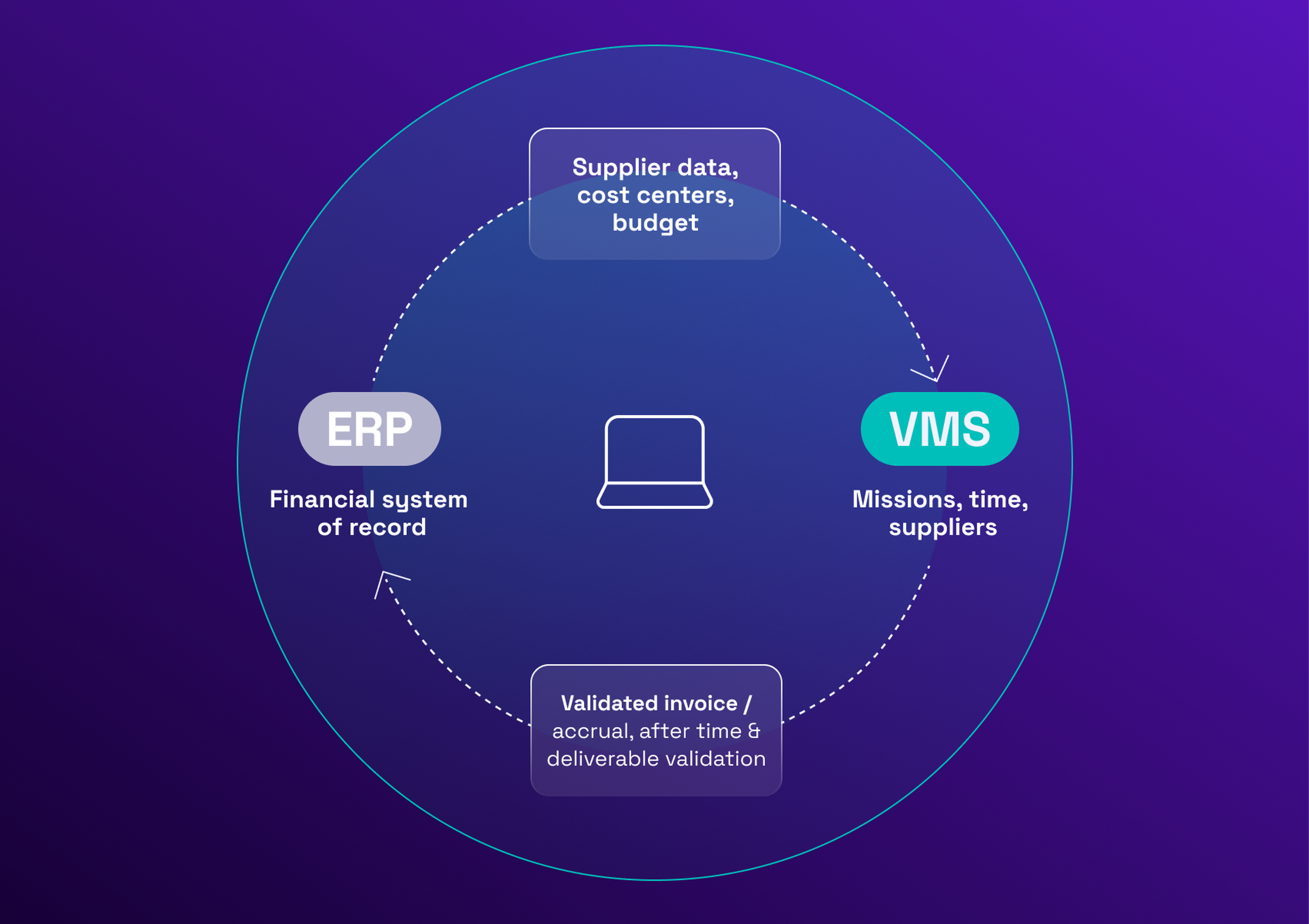
A vendor management system doesn't make the classification judgment call for you, but it's what makes these controls checkable rather than aspirational: assessing your procurement maturity is a reasonable starting point for seeing how many of these seven are actually enforced today versus just written down somewhere.
How to fix misclassification once you find it
Audit. Identify the full scope: how long the engagement has run, how it's evolved, and which of the red flags above actually apply.
Legal review. Have qualified counsel assess the specific facts against the relevant jurisdiction's test before deciding anything. This is general information, not legal advice, and that distinction matters most right here.
Reclassify or restructure. Depending on the review: convert the person to direct employment, restructure the engagement to genuinely fixed-price, deliverable-based work, or end it.
Consider a voluntary settlement program where one exists. In the US, the IRS Voluntary Classification Settlement Program offers reduced liability for employers who proactively reclassify workers going forward.
Document the decision. Whatever the outcome, record the review, the reasoning, and the action taken. An undocumented fix looks, to an auditor, identical to never having checked at all.
Keeping this managed as the program scales
The seven controls above hold up fine for a handful of contractors tracked by memory. They stop holding up once renewals, suppliers and jurisdictions multiply past what any one person can track consistently, which is exactly when a documented policy and what's actually happening in the supplier base start to drift apart.
Book a meeting with one of our experts for a personalized demo.