A request for quotation (RFQ) is a document in which a buyer asks selected suppliers to price a clearly defined scope of work or a set of goods. Suppliers answer with a quote on the same terms, which lets the buyer compare offers like for like and choose mainly on price.
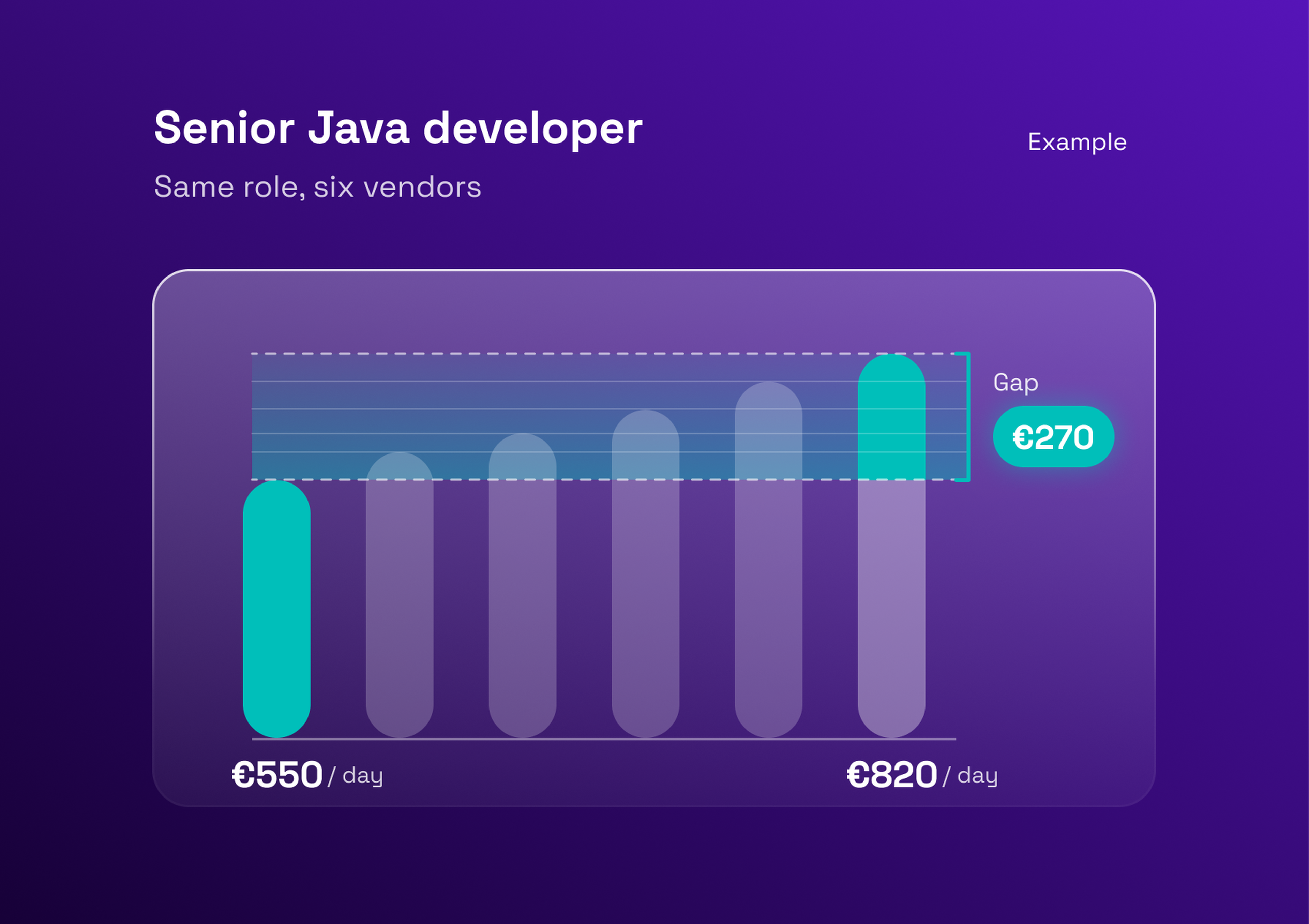
For services, the RFQ works on people and deliverables rather than items. The same profile can be quoted at very different day rates, and a fixed-price quote only compares if the scope is identical. This guide covers the RFQ for IT consultants, contractors, staff augmentation and fixed-price projects: a 7-step process, how to structure day-rate and fixed-price quotes, a worked scoring example for three suppliers and a template to copy. For the wider picture of buying external expertise, see the guide to services procurement.
What is a request for quotation (RFQ)?
An RFQ asks suppliers to price a scope you have already defined. It does not ask them to design the solution.
In an RFQ in procurement, the buyer fixes the scope, the profiles or deliverables and the dates. The supplier's answer is mainly a price, with a few conditions such as availability and how long the quote stays valid. Because every supplier answers the same questions, the quotes can be compared directly. "Request for quote" and "request for quotation" mean the same thing.
An RFQ is the right tool when:
The scope is clear. Two suppliers would read the profile or the deliverables in the same way.
Price is the main way to choose. Quality and compliance matter, but they are checked before the RFQ, not through it.
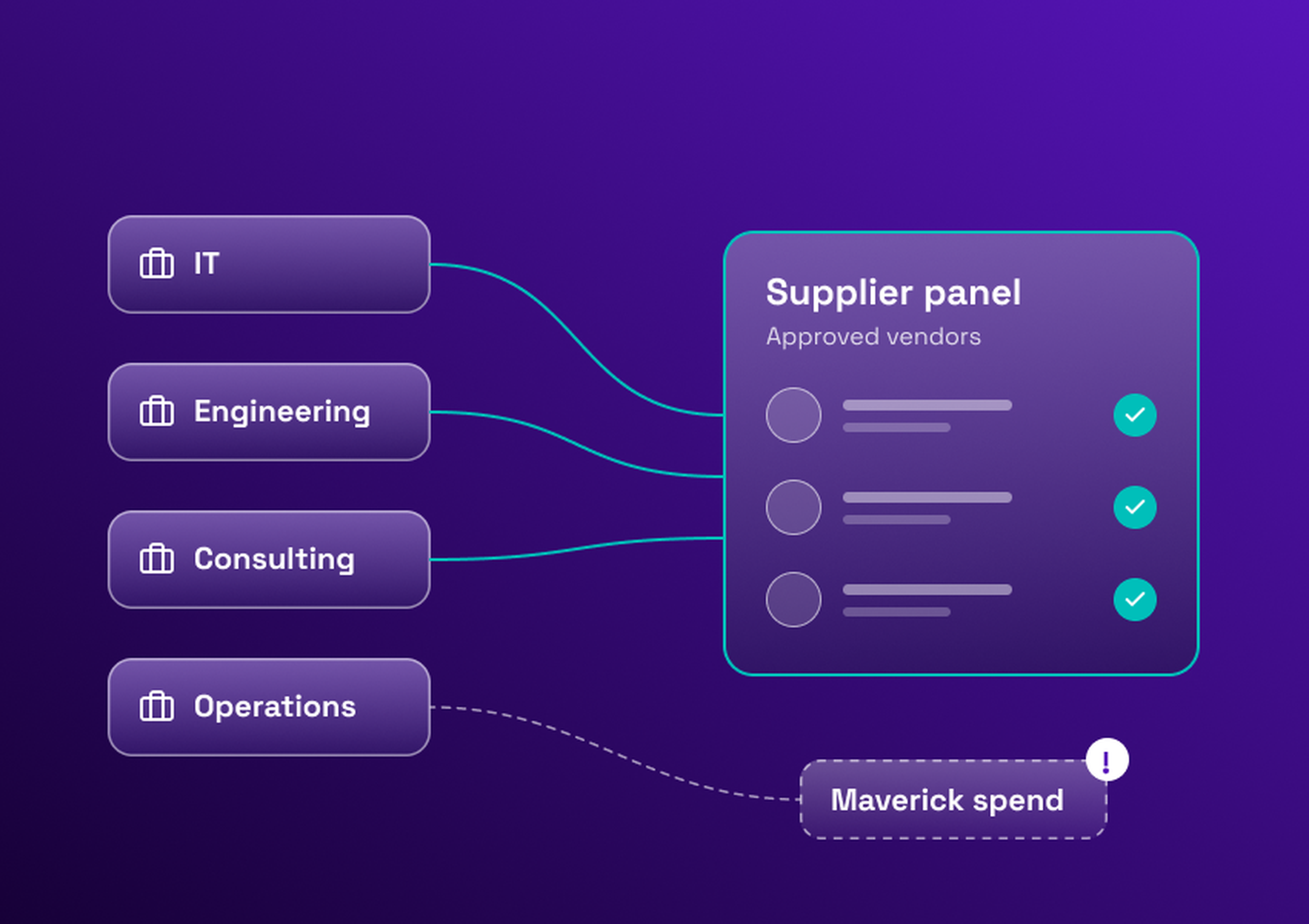
The supplier list is already qualified. The RFQ goes to suppliers that passed checks at onboarding.
Speed matters. An RFQ is shorter to write and to answer than an RFP.
When suppliers need to propose an approach, a team structure or a plan, an RFP is the better tool.
RFQ vs RFP vs RFI: which one do you need?
The difference between a request for proposal vs request for quotation is how much of the solution the buyer has already decided. An RFQ prices a defined scope, an RFP asks suppliers to propose how they would deliver it, and an RFI only collects information.
| RFI | RFQ | RFP | |
|---|---|---|---|
Purpose | Learn what suppliers can offer | Get a comparable price for a defined scope | Get a full proposal: approach, team, timeline and price |
Scope | Not yet defined | Fully defined | Outcome defined, approach open |
Selection criteria | None, used to build a shortlist | Mainly price, with availability and fit | Weighted: approach, team, price, risk |
Typical response time | 2 to 3 weeks | 1 to 2 weeks | 3 to 4 weeks or more |
Services example | Sounding out suppliers for a new skill set | Quotes for a senior Java developer for 6 months | Choosing a partner for a platform migration |
The three documents are steps in a sequence more than rivals. An RFI can build the shortlist, and an RFQ or an RFP follows depending on how open the scope is. The full method for the proposal route is in the guide to how to write an RFP for services.
Can you use an RFQ for services?
Yes, when the profiles or deliverables are well defined and the main differences between suppliers are price and availability. An RFQ for services fits three common situations:
A senior Java developer for six months. Skills, seniority, location and start date are fixed, so the day rate and availability decide.
A fixed-price data migration with a signed-off specification. Every supplier prices the same deliverables and milestones.
A pool of testers for a release. The number of people, the skills and the period are known.
Move up to an RFP when:
The approach is part of what you are buying.
The scope will be shaped together with the supplier.
Team structure and method matter more than price.
The engagement is multi-year or high value.
Between the two, buyers often run an RFQ inside a pre-qualified panel. The document stays short because quality and compliance were checked when each supplier joined the list.
How the RFQ process works: 7 steps
The RFQ process below applies to both day-rate and fixed-price work. Each step produces something the next one needs.
1. Define the need and the scope
Write down what has to be delivered, by when and for whom. For a profile, that means skills, seniority, location, language, start date and duration. For a project, it means deliverables, acceptance criteria and dependencies. Test the scope by asking whether two suppliers would read it in the same way. If they would not, tighten it or move to an RFP. Agree the budget and the cost center internally before the request goes out.
2. Choose the pricing model: day rate vs fixed price
Decide how suppliers will price the work, because the quote format follows from it. The choice between day rate vs fixed price usually depends on how stable the scope is. A stable scope with clear deliverables suits a fixed price tied to milestones. A scope that may change, or work done inside your own team, suits a day rate with an estimated number of days and a cap. State the model in the RFQ so quotes are comparable.
3. Build the RFQ document
Put the scope, the pricing grid, the schedule, the terms and the evaluation criteria in one document, with the same answer format for every supplier. A fixed grid, such as one day rate per profile and expenses on separate lines, stops suppliers from bundling costs in different ways. The checklist and template below cover each section. Attach the draft SoW when one exists, so that the quote matches the contract that will follow.
4. Choose suppliers from your approved vendor list
Invite suppliers already qualified for the category from your approved vendor list rather than making an open call. They have passed checks on documents, insurance and compliance, so the RFQ can stay short. Three to five suppliers is a workable number for most services RFQs. Fewer limits price tension, and more adds review work with little gain. A dynamic supplier listing keeps the list current as suppliers join or leave.
5. Run Q&A and set the deadline
Give suppliers a short window to ask questions, and send every question and answer to all invited suppliers so that none has an advantage. Set a response deadline that allows a proper quote. One to two weeks suits most RFQs for profiles, and fixed-price projects need more. Name one contact for questions. If the scope changes after launch, share the change with everyone and, if it is material, extend the deadline.
6. Compare and score the supplier quotes
Check each quote for completeness first: every line of the grid filled, assumptions stated and a validity date given. Then score the supplier quotes against the weighted criteria published in the RFQ. Compare fixed-price quotes against the same deliverables, and check that each quote matches the SoW. A worked example follows below. Record the scores and the reasons, so the decision can be explained to finance or to an auditor.
7. Award the work, notify the other suppliers and contract
Award to the supplier with the best weighted score, confirm it still fits the budget, and issue the contract or purchase order that references the accepted quote. Notify unsuccessful suppliers promptly, with a short reason based on the scores, because they stay on the panel and will quote again. Keep the full file: RFQ, questions, quotes, scores and decision. For fixed-price work, the guide to SOW-based procurement covers what follows.
What to include in a services RFQ
A request for quotation form for services holds six blocks. Use this list as the base of your RFQ template.
Scope and deliverables. What is to be delivered, the acceptance criteria and any dependencies. For a profile, the tasks and the team it joins.
Required profiles or skills. Skills, seniority, certifications, languages and location, with the number of people and the period.
Pricing grid. One day rate per profile, or one fixed price per milestone, with expenses and taxes on separate lines and the validity period of the quote.
Schedule. Question deadline, response deadline, decision date, start date and mission period.
Terms. Payment terms, intellectual property, confidentiality and data protection under the GDPR, plus the compliance documents required from the supplier. Ask the supplier to confirm how each person is engaged, to limit worker misclassification risk.
Evaluation criteria. The criteria and their weights, stated before quotes arrive, as in the example below.
How to score supplier quotes: a worked example
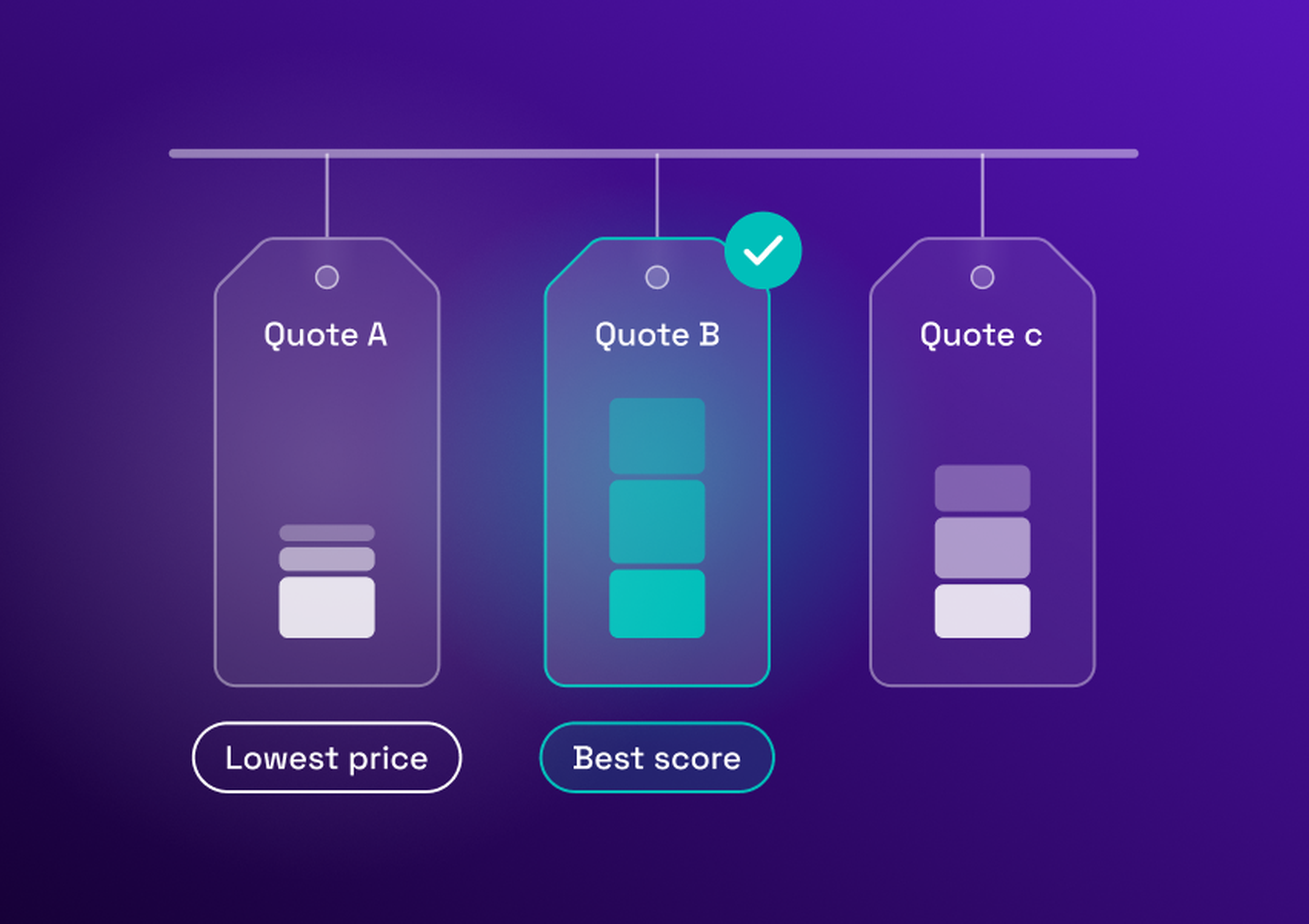
To evaluate supplier quotes, give each criterion a weight, score each supplier on every criterion and add the weighted scores. The total for a supplier is the sum of weight × score across criteria. Price is scored with a normalization formula: price score = (lowest quoted day rate ÷ supplier's day rate) × 100. The cheapest quote gets 100 and every other quote gets a share of it.
The example below is illustrative. It compares three suppliers for a senior Java developer for six months, or 126 working days, with weights of 50% for price, 25% for profile fit, 15% for availability and 10% for past performance. All scores are on a 0 to 100 scale, and price scores are rounded to whole points.
| Supplier A | Supplier B | Supplier C | |
|---|---|---|---|
Day rate quoted | €620 | €560 | €680 |
Price score (50%) | 90 | 100 | 82 |
Profile fit (25%) | 90 | 60 | 94 |
Availability (15%) | 80 | 50 | 100 |
Past performance (10%) | 85 | 70 | 75 |
Weighted total | 88.0 | 79.5 | 87.0 |
The totals work out as follows:
Supplier A: 0.50 × 90 + 0.25 × 90 + 0.15 × 80 + 0.10 × 85 = 45 + 22.5 + 12 + 8.5 = 88.0
Supplier B: 0.50 × 100 + 0.25 × 60 + 0.15 × 50 + 0.10 × 70 = 50 + 15 + 7.5 + 7 = 79.5
Supplier C: 0.50 × 82 + 0.25 × 94 + 0.15 × 100 + 0.10 × 75 = 41 + 23.5 + 15 + 7.5 = 87.0
Supplier B has the lowest rate and the lowest total. Over 126 days, B costs €70,560 and A costs €78,120, a gap of €7,560. That gap buys a better profile fit and an earlier start. Whether it is worth paying depends on the cost of a weaker match and a late start, which is why the weights are agreed before quotes arrive and not after.
Two rules make bid evaluation fairer:
Compare fixed-price quotes with day-rate quotes through an effective day rate. Divide the fixed price by the estimated days, then check that the scope is identical before comparing.
Look closely at the lowest quote. A price far below the others often means the scope was misread. Ask the supplier to confirm the assumptions in writing.
Common RFQ mistakes in services procurement
A vague scope. Suppliers fill the gaps with their own assumptions, quotes stop being comparable, and the price rises later through change requests.
Day rates that cannot be compared. A junior and a senior profile are not the same product. Ask for one day rate per defined profile and seniority.
Too few or too many suppliers. One or two quotes give no price tension. Ten create review work, and good suppliers may skip an RFQ they have little chance of winning.
Deadlines that are too short. Rushed quotes contain padding or errors, and the best suppliers may not answer at all.
Splitting requirements to avoid a full tender. Cutting one need into several small RFQs to stay under an approval threshold is a compliance risk, and the kind of pattern audits look for. Thresholds depend on the organization and, for public buyers, on the law.
Free request for quotation template for services
Copy the table below into a document and fill in one row per section. It works for day-rate and fixed-price RFQs. Delete the lines that do not apply.
| Section | What to write |
|---|---|
Buyer and contact | Company, department, one contact for questions |
Need and scope | Context, deliverables or profile, location, language, constraints |
Profiles or deliverables | Skills and seniority per profile, or deliverables with acceptance criteria and milestones |
Pricing grid | Day rate per profile with estimated days, or fixed price per milestone; expenses and taxes on separate lines |
Schedule | Question deadline, response deadline, decision date, start and end dates |
Terms and compliance | Payment terms, IP, confidentiality, GDPR, compliance documents, confirmation of worker status |
Evaluation criteria | Criteria and weights, for example price, profile fit, availability and past performance |
Submission | Format, language, validity of the quote, where to send it |
Running RFQs at scale with a VMS
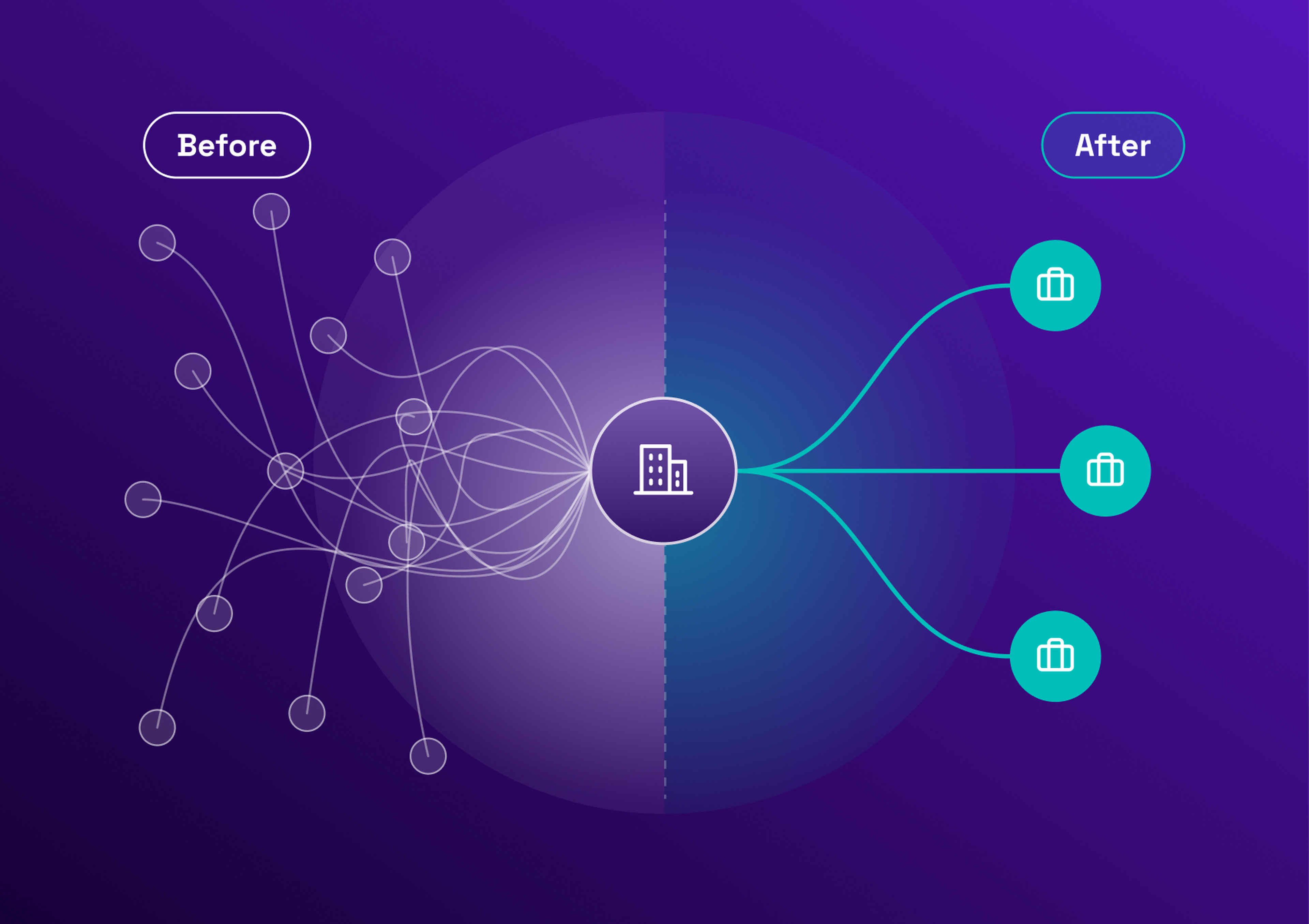
Email and spreadsheets work for one RFQ. They stop working when several managers launch RFQs at the same time, each with their own format and their own list of suppliers. A vendor management system moves the process into one place:
A qualified supplier list. The approved vendor list and each supplier's documents sit in the platform, so an RFQ goes only to suppliers that are cleared to receive work.
Quotes in one format. Responses arrive against the same grid and can be compared side by side.
An audit trail. Questions, quotes and the decision are recorded in the same place.
No re-keying. The accepted rate and scope carry into the mission, timesheets and invoicing, so nothing is re-keyed.
When you assess request for quotation software, check that it handles day-rate and fixed-price quotes, not only unit prices. The Eleven VMS platform is built for services spend, from the supplier list to the invoice.
From a defined need to comparable quotes
Start with the numbers. Estimate your VMS ROI to see what a governed supplier process could be worth.
Book a meeting with one of our experts for a personalized demo.