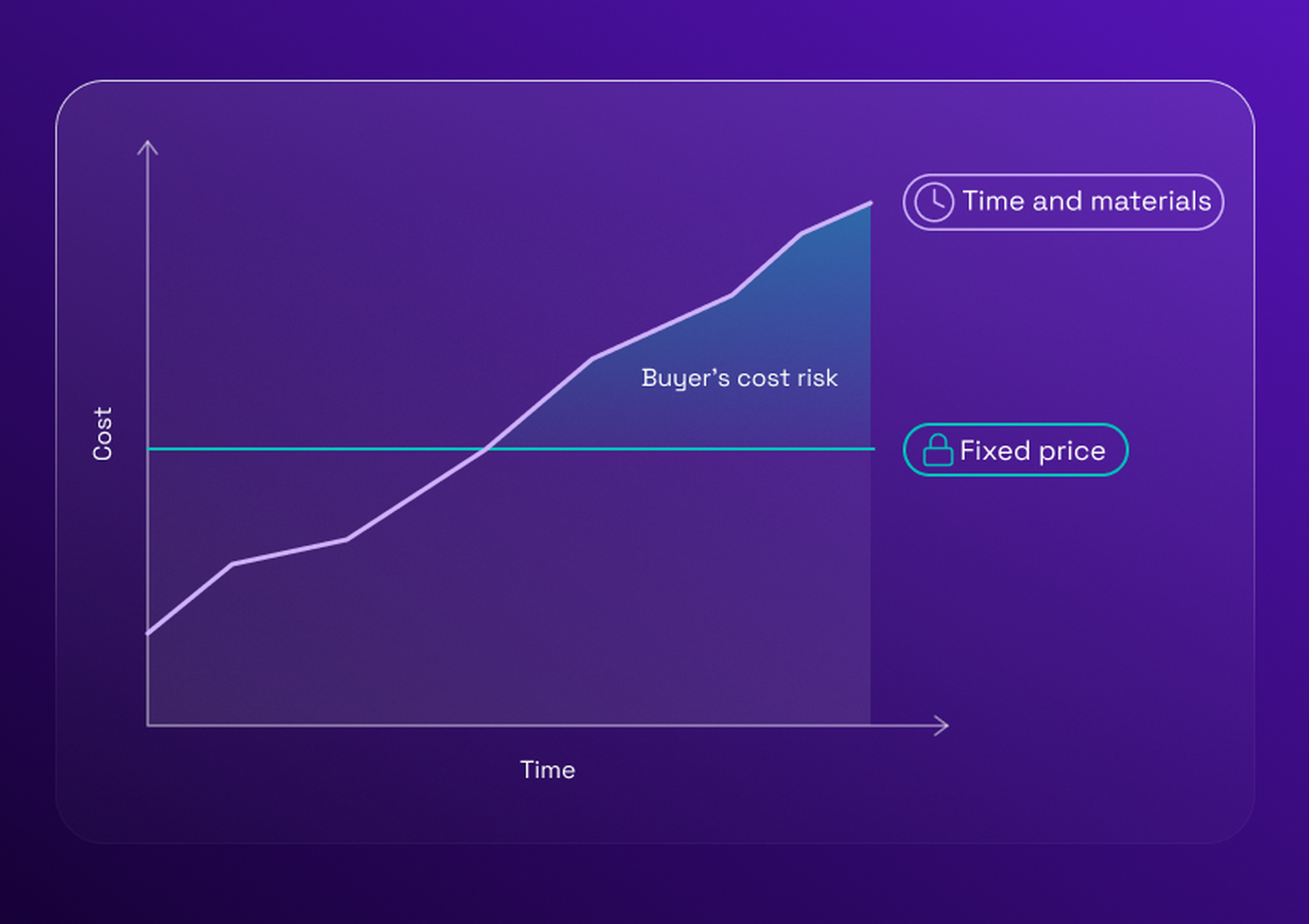
Fixed price vs time and materials comes down to who carries the risk. A fixed price contract moves delivery risk to the supplier in exchange for a defined scope and a risk premium. Time and materials (T&M) keeps flexibility but leaves cost risk with the buyer.
Most guides on this topic are written for suppliers, contractors or construction firms. This one is for the buyer: the procurement manager or category buyer who contracts consulting, IT and engineering services across a panel of suppliers, as described in the guide to services procurement. It covers the two models, who carries which risk, the hidden costs of each, a 7-question scorecard to choose, and the controls that make each model work at scale.
Fixed price vs time and materials at a glance
| Criteria | Fixed price | Time and materials |
|---|---|---|
Pricing basis | A set price for defined deliverables, paid by milestone | A day or hourly rate multiplied by time worked, plus expenses |
Who carries cost risk | Mostly the supplier, who builds a contingency into the price | The buyer, up to any cap |
Scope flexibility | Low: changes go through a change request | High: scope can move with the work |
Budget predictability | High once the scope is agreed | Lower: depends on the time consumed |
Buyer oversight effort | Front-loaded: writing the scope and acceptance criteria, then sign-off | Continuous: timesheets, extensions and budget follow-up |
Typical contract document | A SOW with milestones and acceptance criteria | A rate card or a PO under a framework agreement |
Best-fit missions | A defined outcome, a stable scope and measurable deliverables | An evolving scope, embedded capacity, discovery or support work |
The table shows a trade: fixed price buys predictability and pays for it with a premium and rigidity, while T&M buys flexibility and pays for it with oversight. Neither is better in itself, and the rest of this guide helps you decide which fits a given mission.
What is a fixed price contract?
A fixed price contract, also called a firm fixed price contract, sets a total price for defined deliverables, usually paid against milestones and acceptance criteria. The supplier commits to a result and carries the cost of getting there, in exchange for a risk premium built into the price.
Romain Lopez, Managing Director at Eleven VMS, frames the difference as an obligation of result: the supplier commits to one or more deliverables, broken down into milestones validated along the way, within a budget and timeline set from the outset. In practice, a fixed price engagement rests on four elements:
defined deliverables, written precisely enough to be checked
milestones that split the work into stages
acceptance criteria that say what a deliverable must meet to be accepted
payments tied to milestone acceptance, not to time spent
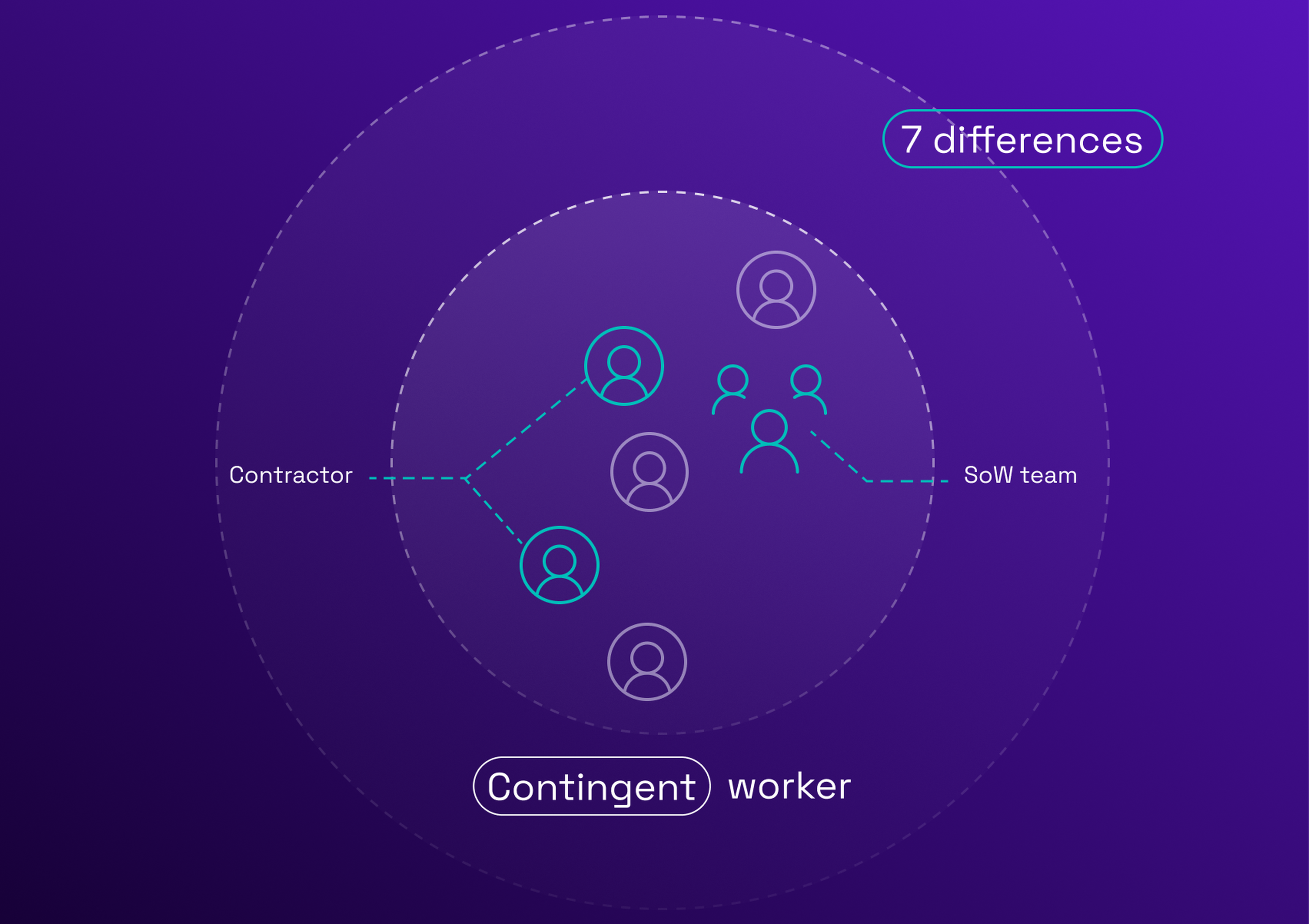
Anything outside that scope goes through a change request, which the supplier prices separately. This is the logic of SOW-based procurement, where the quality of the statement of work decides the quality of the outcome.
What is a time and materials contract?
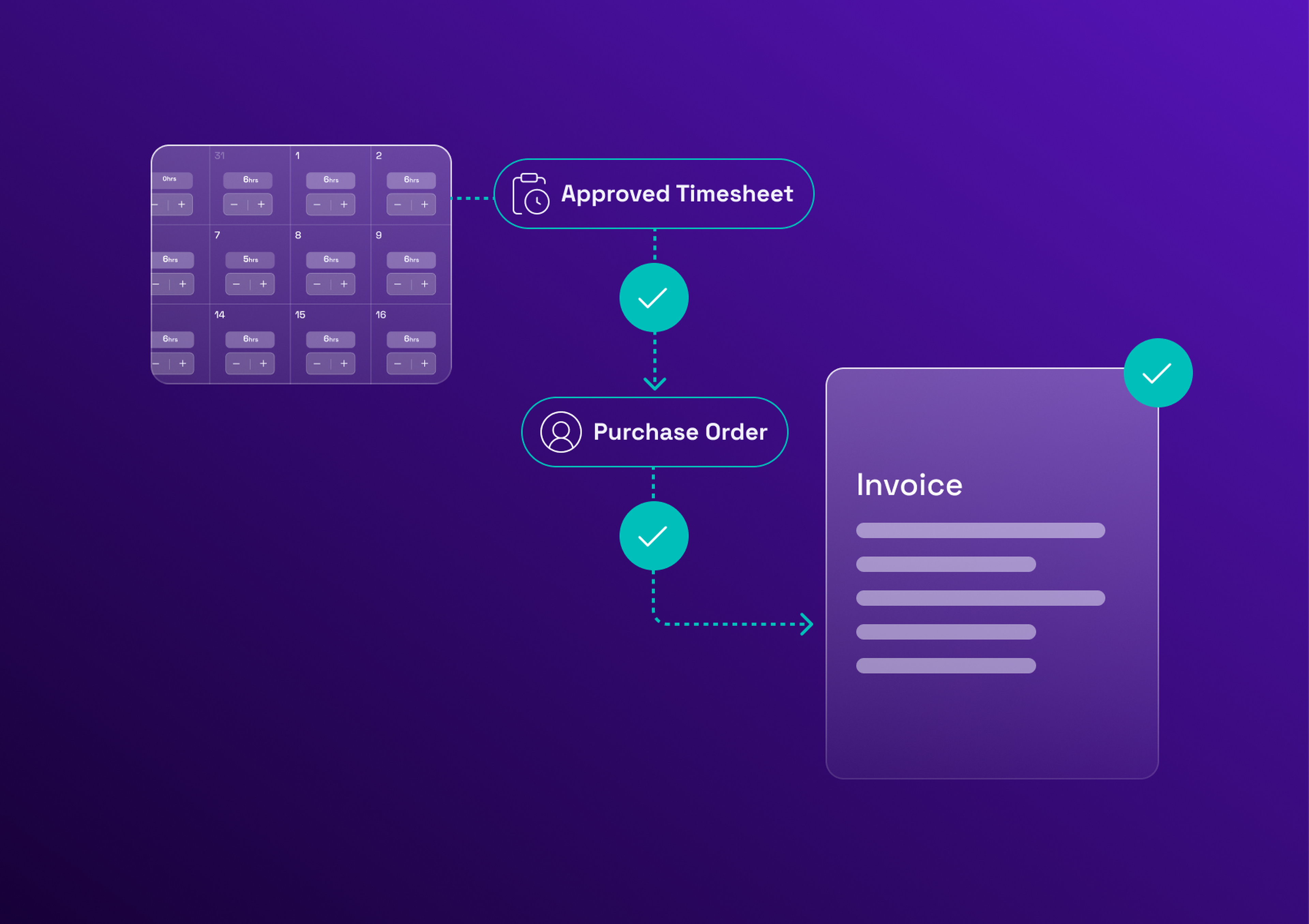
A time and materials contract bills the supplier's time at an agreed hourly or day rate, plus agreed expenses, against approved timesheets. The buyer pays for the effort actually used and keeps control of the scope, and an optional not-to-exceed cap can limit the total.
European buyers often call this model day rate, because intellectual services there are priced by the day. The same framing applies: the consultant commits to providing expertise for a given day, under an obligation of means, without a guarantee of a specific outcome. The buyer directs the work, approves the time, and carries the risk that the job takes longer than planned.
Three features define the model:
a rate card or an agreed day rate per profile, which fixes the price of time
timesheets, which are the evidence of what was worked and the basis of the invoice
an optional not-to-exceed cap, which sets a ceiling on total spend
Who really carries the risk?
| Risk | Fixed price | Time and materials |
|---|---|---|
Cost | The supplier, through a risk premium built into the price. The buyer pays for changes | The buyer, for every extra day, unless a cap is set |
Delivery and quality | The supplier, tied to milestone acceptance | Shared: the supplier provides skills, the buyer directs the work and answers for the outcome |
Scope | The buyer, who pays for each change request | The buyer, but absorbed more easily because scope can move |
Compliance | Lower, because the supplier directs its own team | Higher, if the supplier's staff are managed like employees |
The contract terms decide who carries the risk, not the label. A fixed price contract with vague scope pushes the supplier to price a large contingency and then fight every change. A T&M contract with a cap, a rate card and strict approval of extensions shifts much of the cost risk back toward control. Contract risk allocation is the sum of those terms, and it is worth reading them before choosing a model.
Compliance risk with T&M contractors
When T&M contractors are managed like employees, with fixed schedules, daily tasking and performance reviews, the engagement starts to look like employment. In the fixed price vs time and materials question, this is the risk that is easiest to overlook. Regulators test the relationship, whatever the contract says. The IRS common-law test looks at behavioral control, financial control and the relationship of the parties. In France, the Code du travail prohibits illicit labor lending when a supplier does little more than provide staff. The guide on contractor compliance risks covers co-employment and misclassification in detail. This is general information, not legal advice, and contract terms should be reviewed by legal.
The hidden costs of each model
Neither model costs only its headline price. Each has costs that show up later.
Fixed price:
supplier contingency: the price includes a margin for risk the supplier cannot predict, paid whether or not the risk materializes
the cost of change requests: every change to scope is negotiated and priced separately, often at a premium
time spent writing specifications: a good fixed price needs a precise scope, and writing it takes buyer time before the work starts
disputes over acceptance: if criteria are loose, the end of a milestone becomes a negotiation
Time and materials:
timesheet admin: every day must be submitted, checked and approved, and timesheet approval at scale is a workload of its own
rate drift: rates creep upward across renewals and suppliers when there is no rate card to hold them
mission extensions nobody questions: a mission renewed by default becomes a standing cost
weaker incentives to deliver efficiently: the supplier is paid for time, so finishing earlier lowers its revenue
How to choose: a 7-question scorecard
Seven questions are enough to choose a contract type in most fixed price vs time and materials decisions. Answer each one for the mission in front of you, then count which model each answer points to.
| Question | Points to fixed price if | Points to T&M if | |
|---|---|---|---|
1 | Can you write acceptance criteria today? | Yes, clearly | No, or only partly |
2 | How likely is the scope to change? | Unlikely | Likely |
3 | Who will manage the work day to day? | The supplier | Your own team |
4 | Is the budget fixed or flexible? | Fixed | Flexible |
5 | How critical is the deadline? | Firm and critical | Flexible |
6 | How mature is the supplier relationship? | New or unproven supplier | Established supplier with an agreed rate card |
7 | Is there a compliance risk if the supplier's staff are embedded in your teams? | Yes, there is | No, the work stays outside your teams |
How to read the score:
6 or 7 answers for one model: choose that model.
5 answers for one model: lean toward it, and add a safeguard taken from the hybrid options below.
4 against 3: use a hybrid contract.
The scorecard is a decision aid, not a formula. Give more weight to the question that matters most for the mission, such as the compliance question when staff will be embedded in your teams.
Three worked examples show how it works. "FP" means the answer points to fixed price, "T&M" to time and materials.
| Mission | Q1 | Q2 | Q3 | Q4 | Q5 | Q6 | Q7 | Result |
|---|---|---|---|---|---|---|---|---|
ERP migration | T&M | T&M | FP | FP | FP | T&M | T&M | Hybrid (4 against 3) |
Team of embedded developers | T&M | T&M | T&M | T&M | T&M | T&M | FP | T&M (6 against 1) |
Regulatory audit | FP | FP | FP | FP | FP | T&M | T&M | Lean fixed price (5 against 2) |
The ERP migration splits the vote: criteria are only partly writable and the scope will evolve, but the budget is approved, the go-live date is firm and the integrator's project team works on its own. A T&M discovery phase followed by a fixed price build fits. The embedded developers point clearly to T&M, since the buyer directs the work, but the one answer pointing the other way is the warning to heed: that is exactly where tenure limits and clear scope matter. The regulatory audit has measurable deliverables and a firm date, so fixed price leans strongly, with the milestones and acceptance criteria as the safeguard.
Hybrid models when neither fits
When the scorecard splits, a hybrid contract keeps the strengths of each model. Four structures are common:
Capped T&M (not-to-exceed): time is billed at the day rate, but total spend cannot go beyond an agreed ceiling without approval. This keeps flexibility while limiting cost risk.
T&M for discovery, then fixed price for the build: a short T&M phase clarifies scope and criteria, and the build is then priced as fixed price once it can be described.
Fixed price per phase: each phase has its own scope, price and acceptance, so a scope change in one phase does not reprice the whole mission.
Per-deliverable pricing: a price per unit of work, such as a report, a module or a test campaign, used for recurring work with a repeatable shape.
The closest related decision is how to choose between adding capacity and buying a managed outcome, covered in staff augmentation vs managed services. The same logic applies: the more the supplier owns the outcome, the closer the model sits to fixed price.
Managing fixed price and T&M missions across your supplier panel
Choosing the model is half the job. Running dozens of missions across a supplier panel, in both models, needs a different control for each.
Fixed price governance
Fixed price governance is built on the statement of work. It covers milestones, deliverable sign-off and the acceptance record. Milestones can be defined by the buyer, or proposed by the supplier, which also shows how well the supplier structures the work and anticipates deadlines. Every deliverable needs a named approver and a recorded decision, so that payment follows acceptance and not the calendar.
T&M governance
T&M governance is built on the rate card. It covers day rate benchmarks, timesheet validation, approval of extensions and budget alerts. The aim is that no day is billed at a rate outside the card, no mission runs past its budget unnoticed, and no extension is granted by default. At Inetum, automating timesheet validation was one of the project's stated objectives, and the reported results include more secure validation and time savings thanks to "fewer manual exchanges".
KPIs to track for each model
| Model | KPIs |
|---|---|
Fixed price | Milestones delivered on time, deliverable acceptance rate |
Time and materials | Rate variance against the card, budget consumed against planned, extension rate |
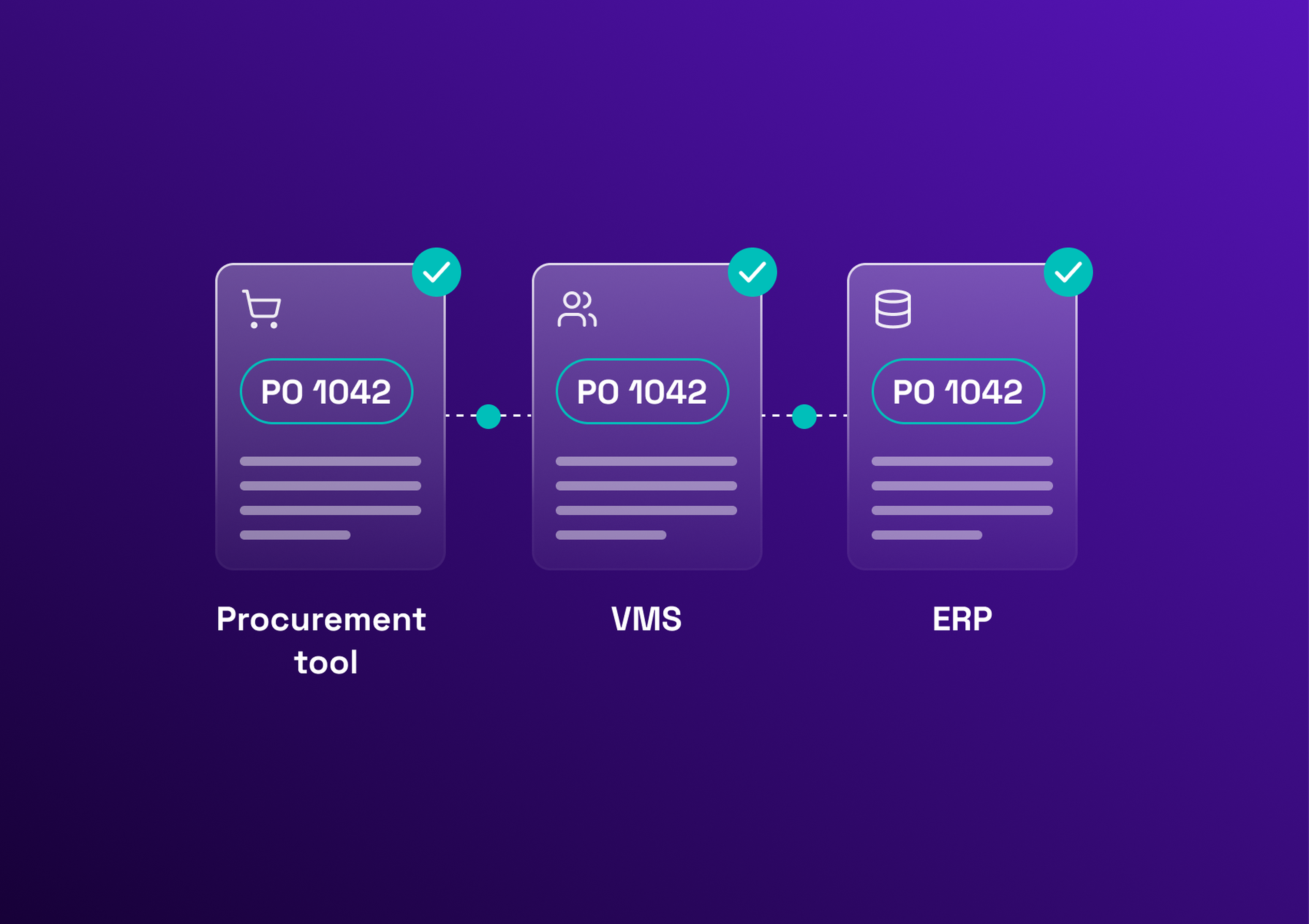
These sit alongside the wider procurement KPIs a team already tracks. A vendor management system keeps both models in one place: Eleven VMS manages time and materials, fixed price and fixed price with time and materials from a single interface, with deliverables, milestones, contracts and attachments in one space for fixed price missions.
Common mistakes buyers make
Choosing fixed price to "transfer risk" while the scope is vague: the supplier prices a large contingency, then contests every change.
Letting T&M run as an open cheque: no cap, no rate card and no approval of extensions.
Never re-checking the model when a mission is renewed: a discovery mission that became a standing team should no longer be run as it began.
Mixing both models on one PO with no split in reporting: spend by model becomes impossible to see.
Asking T&M staff to follow fixed schedules and daily tasking: the saving on oversight is paid for in compliance risk.
Run both models in one platform
A clear scorecard and a few controls remove most of the guesswork from the choice. A platform keeps those controls in place when missions and suppliers multiply: manage fixed-price and T&M missions in one platform, or calculate your VMS ROI to estimate what centralizing that spend is worth.
Book a meeting with one of our experts for a personalized demo.