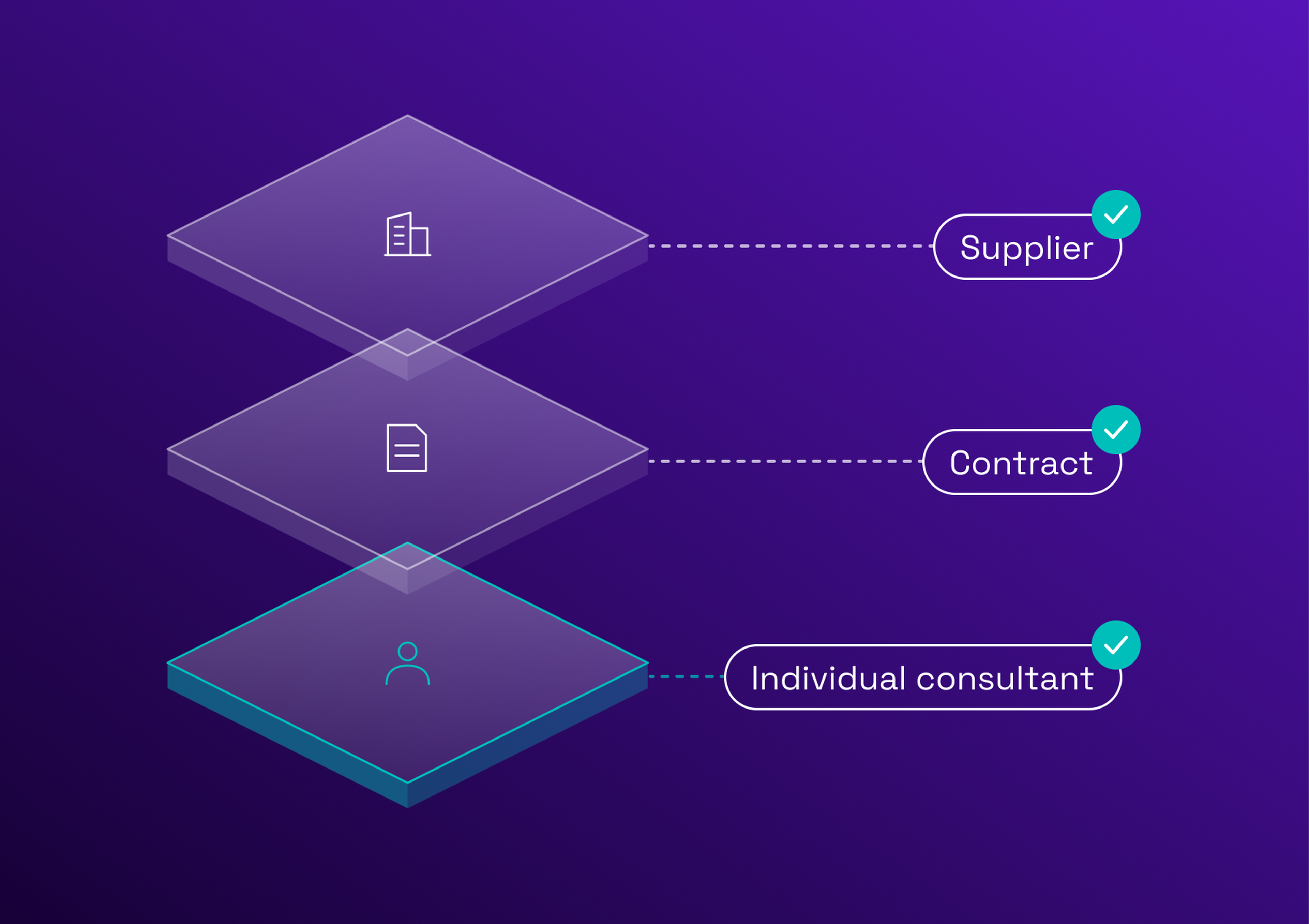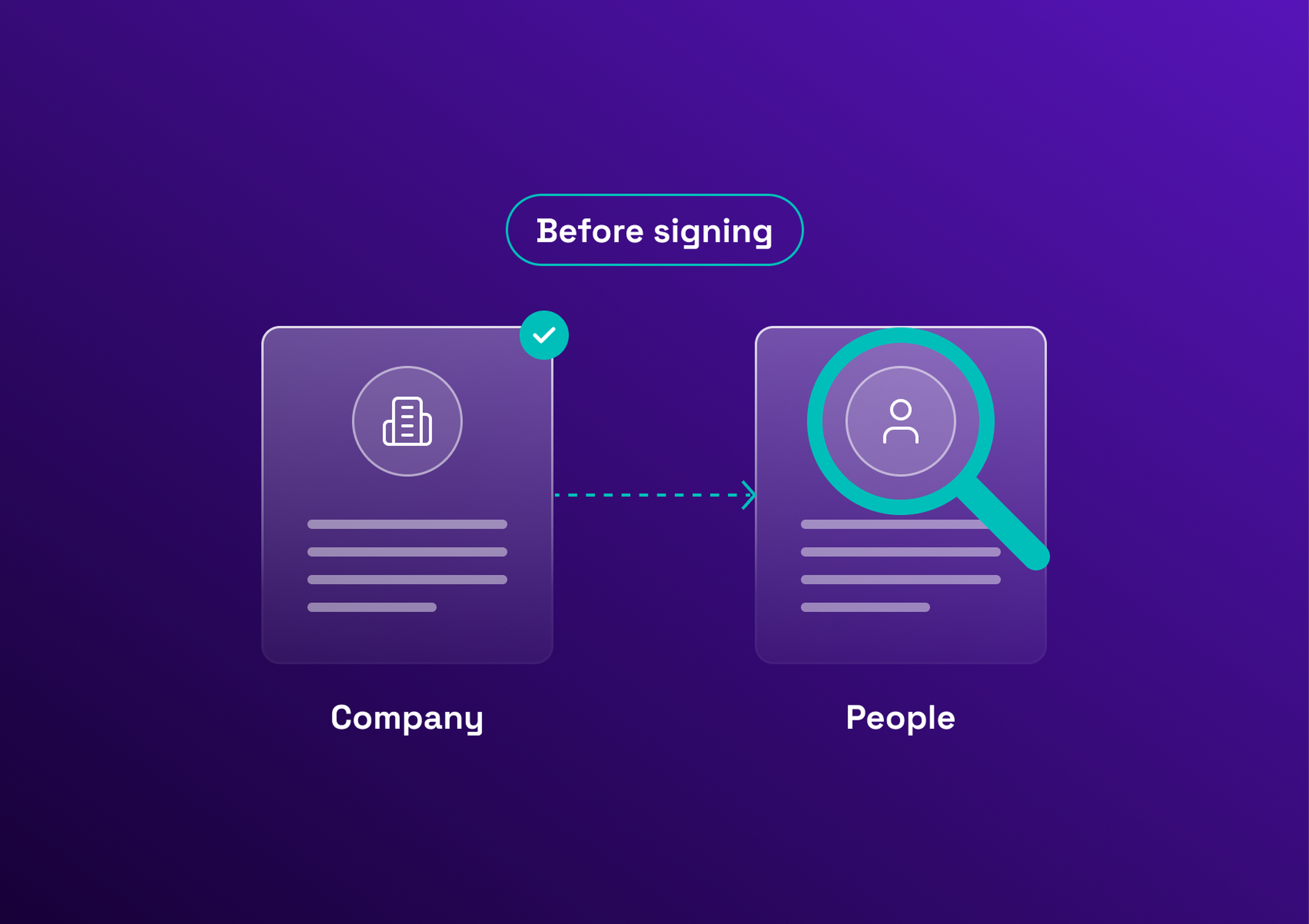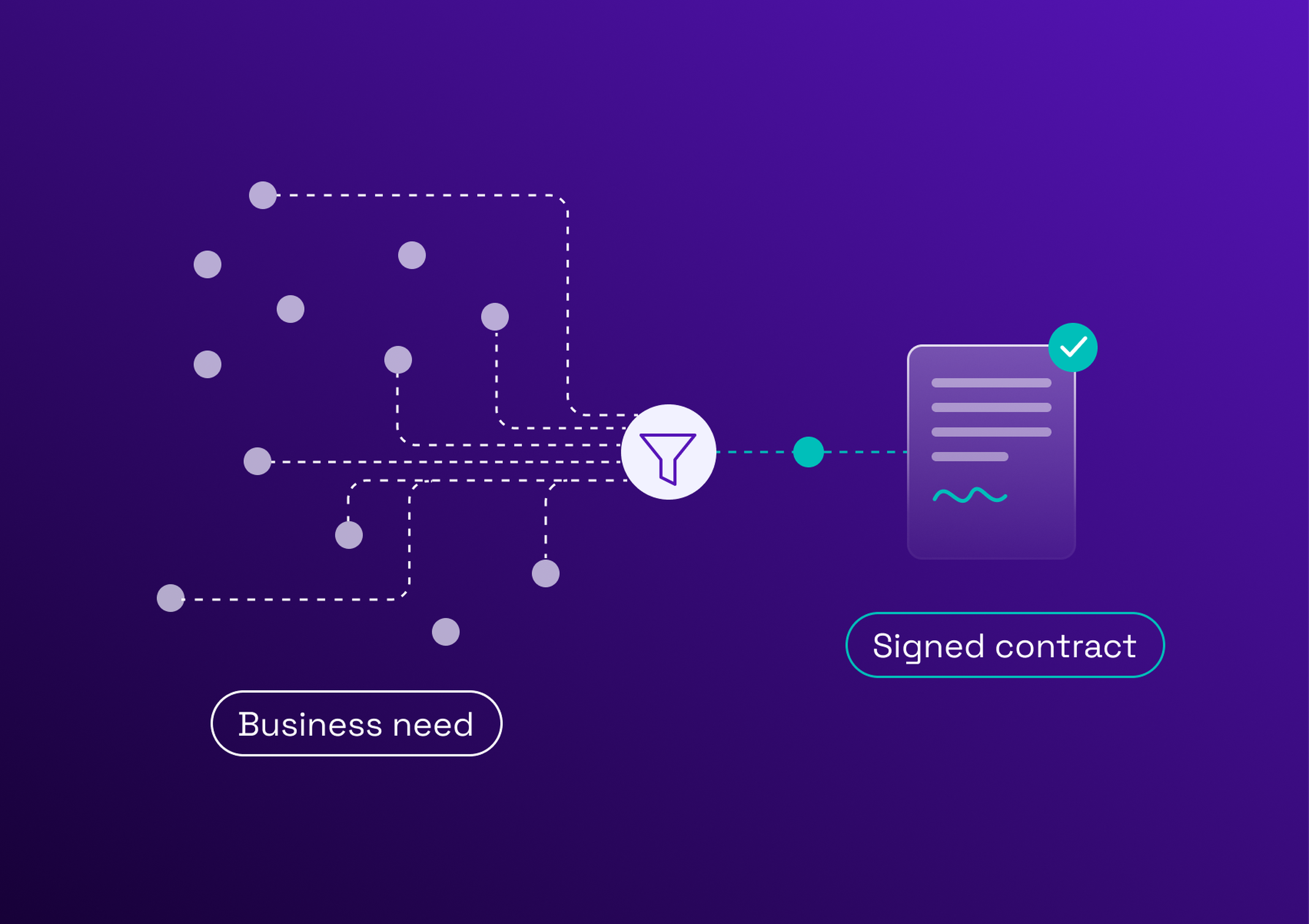
Services sourcing is the process of finding, evaluating and contracting external providers of consulting, IT and engineering services, from the moment the business states a need to the signed contract. It covers the scope, the sourcing route, the evaluation of providers and the negotiation of terms. Unlike sourcing goods, it means choosing between people, outcomes and pricing models that cannot be compared on a specification and a unit price. This guide is for buyers. It covers the six steps of the process, how to choose a sourcing route, how to compare a day-rate offer with a fixed-price offer, and the mistakes that most often lock a company into the wrong provider.
What is services sourcing?
Services sourcing is the part of services procurement that turns a business need into a signed contract: defining the scope, choosing a route to market, evaluating providers and negotiating the terms. It covers consulting, IT and engineering services bought by the day, by the project or as a managed service.
Professional services sourcing differs from sourcing goods because what is bought is expertise and outcomes, not an item that can be inspected on delivery. The same need can be met by one senior consultant, a small team or a fixed-price project, and each answer changes the price, the risk and the way the supplier is managed. This guide is written for the buyers who make those choices.
Services sourcing vs services procurement
Sourcing ends at the contract. Services procurement covers the whole cycle: it adds delivery, time approval, invoicing, performance review and close-out. A company can source well and still lose control afterwards, which is why the two are treated as separate steps with separate owners. The guide to the services procurement process covers the full cycle. This guide stops at the signature.
How sourcing services differs from sourcing goods
The differences explain why a goods-based sourcing playbook fails when it is applied to services.
| Sourcing goods | Sourcing services | |
|---|---|---|
Specification | A technical specification and a catalog reference | A scope, deliverables and a profile, often refined with the supplier |
Price comparison | Unit price multiplied by quantity | Day rate multiplied by days, or a fixed price with assumptions: the same price can hide different seniority mixes |
Quality check | Inspection at delivery | Acceptance criteria, and review during delivery |
Supplier switching | Usually easy, because items are interchangeable | Costly, because the knowledge sits with the people and a change mid-project resets progress |
Main risk | Wrong quantity, late delivery, defects | The wrong profile, scope drift, and dependence on one provider |
The comparison also shows where this work needs its own tools: a scope document instead of a specification, a way to compare pricing models, and a defined way to accept the work.
The services sourcing process in 6 steps
The six steps below are a strategic sourcing process adapted to services. They run in order, and each one is short when the previous one was done well.
1. Confirm the need and the make-or-buy decision
Start with who needs what, by when, and why. Ask whether internal staff can do the work. If the capability is needed permanently, hiring may be the answer. If it is temporary or specialized, buying is. Name the budget owner now, because the next steps depend on a budget that someone controls.
2. Define the scope and choose day rate or fixed price
The scope is the center of the process. When the outcome can be specified, a fixed price fits. When the scope will evolve, a day rate fits. The guide to fixed price vs time and materials explains how to choose, so it is not repeated here.
3. Choose the sourcing route
Four routes exist, from a direct award to a full tender. The right one depends on the value, the risk and the suppliers already qualified. The decision table in the next section is the tool for this step.
4. Engage the market
Send the request to the right suppliers and give them what they need to answer well: the scope, the profiles, the timeline, the budget range and the evaluation criteria. The guide on how to write an RFP for services covers the request itself, and its steps and scorecard are not repeated here.
5. Evaluate, check references and negotiate
Compare offers on the same basis, as shown in the section on comparing offers. Check references on similar work, not only on the supplier's size. Confirm who the named key personnel are, and negotiate the rate card and the acceptance criteria while the supplier still has competition.
6. Contract and onboard
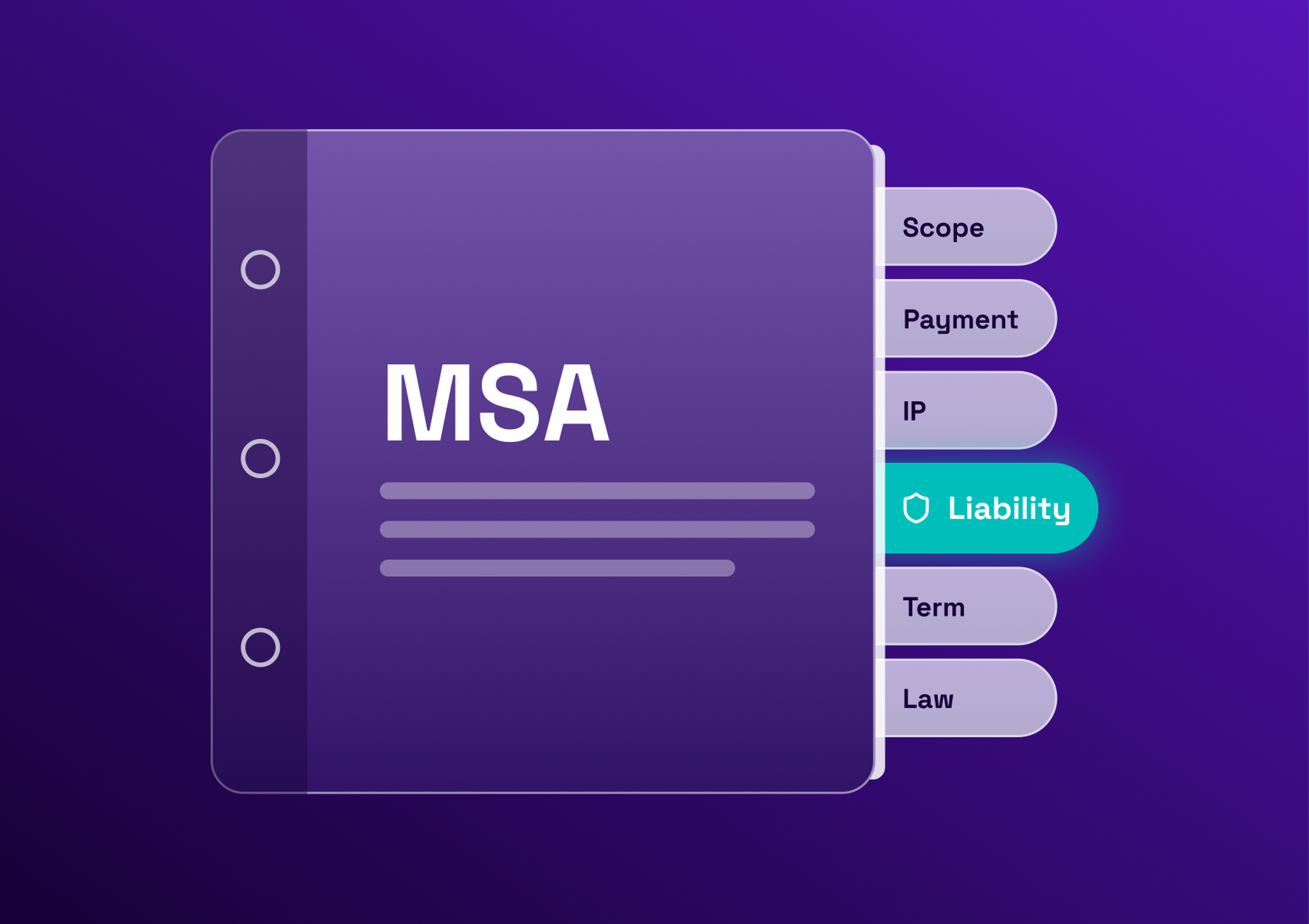
Turn the choice into a SOW with deliverables, milestones and acceptance criteria, under the master service agreement terms. The guide to SOW-based procurement covers how to structure it. Onboard the supplier and each consultant, so that the work can start with the access and documents in place.
Which sourcing route fits your need?
The route is the most important decision in services sourcing, because it sets the speed, the cost of the process and how many alternatives are really considered. The table compares the four routes. The levels are qualitative: the thresholds that separate them depend on each company's policy and are not benchmarks.
| Route | When it fits | Typical spend or risk level | Speed | Main risk |
|---|---|---|---|---|
Direct award | A well-known need that a qualified supplier already meets, or an urgent one | Low | Fastest | Paying more than the market, and letting one provider become the default |
Panel call-off | A recurring need that a supplier already on the panel can meet | Low to medium | Fast | Panel suppliers become complacent when they are never challenged |
Mini-competition | A defined need within a panel, where several qualified suppliers can compete | Medium | Moderate | Time spent on a competition for a small gain |
Full RFP | A high-value, strategic or new need, or one the panel cannot meet | High | Slowest | Cost and delay of a long process, and incomplete requests |
The first three routes work only if suppliers have been qualified beforehand. This is the role of the preferred vendor panel and of the approved vendor list: a call-off can be fast only when the suppliers it calls on are already onboarded. It also explains the incumbent risk. When no alternative has been qualified, the same provider is re-awarded by default, whatever the route. Keeping the panel up to date, as described in the guide to managing your supplier panel, is what keeps the alternatives real.
How to compare service offers fairly: services pricing models
A day-rate offer and a fixed-price offer cannot be compared on their headline price. The services pricing models answer different questions: a day rate prices effort, and a fixed price prices an outcome and its risk. Four checks make them comparable: the effective rate, the profile mix, the assumptions and the change-request terms.
The example below is illustrative. Two suppliers answer the same request for a data migration.
| Offer A: day rate | Offer B: fixed price | |
|---|---|---|
Price | 108,000 euros: 60 days of one senior consultant at 700 euros, and 60 days of two experienced consultants at 550 euros each | 120,000 euros |
Estimated days | 180 | 150 |
Effective day rate | 600 euros | 800 euros |
Assumptions | Time is billed as worked, with no cap | Data volumes and the number of test cycles are stated |
Change requests | Not needed: scope changes are absorbed by extra days | Priced separately, at an agreed rate |
Overrun risk | Carried by the buyer | Carried by the supplier, within the assumptions |
Read on its rate alone, Offer B is 33% more expensive per day. Read on its outcome, the picture changes. Offer A costs more than Offer B as soon as the work overruns by more than 11%: 108,000 euros multiplied by 1.2, a 20% overrun, makes 129,600 euros, which is above 120,000. The right choice depends on how well the scope is known. A buyer with a stable scope and little tolerance for overruns will prefer B, and a buyer whose scope is still moving will prefer A. Tracking rates over time also pays back. At Parrot, Victor-Louis Destailleur, Head of Purchasing, says: "Tracking key performance indicators, particularly average daily rate, has allowed us to better manage our expenses, and therefore save money." Rates matter, and they are only one of the four checks.
Common services sourcing mistakes
Sourcing the person rather than the outcome. A strong profile does not guarantee a result, and the contract should say what is delivered.
Re-awarding the incumbent by default. Without a qualified alternative, there is no leverage on price or quality.
Comparing day rates alone. A lower rate with a heavier junior mix or a looser scope is not cheaper.
Having no named key personnel. The supplier can then replace the senior profile that won the bid with a junior one.
Having no acceptance criteria. Without them, "done" becomes a negotiation at the end of the project.
When software helps with services sourcing
General e-procurement tools are built for goods and for services with a clear unit price. They suit time-based and outcome-based work less well: they hold few of the elements that matter here, such as profiles, rates by seniority, missions, milestones and time. A vendor management system adds what this process needs: a supplier panel that stays current, tenders and rate cards that apply to every request, contracting with framework agreements, and an audit trail that records who chose what, and why.
None of this replaces the decisions above. A tool does not decide the route or the pricing model, but it makes the choice repeatable, and it keeps the evidence of how each provider was chosen.
Choosing providers in one place
Services sourcing is a series of decisions, and a platform keeps them consistent when requests and suppliers multiply. To see where your own process stands, assess your procurement maturity or calculate your VMS ROI.
Book a meeting with one of our experts for a personalized demo.