Vendor due diligence is the structured review a buyer runs on a supplier before signing: it checks the company, its documents and the people it will send, and it produces a recorded decision to approve, approve with conditions, or decline. It happens at onboarding and again at set triggers. For consulting, IT and engineering suppliers, the review has to cover the individuals who deliver the work as well as the company, which most guides leave out. This article gives a working checklist, with the evidence to request, an owner and a red flag for each check.
What is vendor due diligence?
Vendor due diligence, also called supplier due diligence, is the review of a supplier's identity, finances, compliance, security and ways of working before a buyer commits to it. Its output is a decision on file: who checked what, on which evidence, and what was concluded. It answers one question: should we let this supplier work for us, and on what conditions?
It differs from ongoing third-party risk management. Due diligence is the entry review of one supplier. Third-party risk management is the continuing system that tiers suppliers, monitors them and acts when something changes. Due diligence feeds it, and the third-party risk management guide covers the monitoring side.
Looking for the M&A meaning? In mergers and acquisitions, vendor due diligence is a report that a seller commissions on its own business before a sale. This article covers the procurement meaning: reviewing a supplier you plan to buy from.
Why service suppliers need a different review
Most guides describe third-party vendor due diligence for a company that sells software. A service supplier is a different case, because it sends people into your organization. The table compares the two.
| Software vendor | Consulting, IT or engineering supplier | |
|---|---|---|
What you buy | A product and a license | People's time and expertise, or a delivered outcome |
Who has access | The product, often through an integration | Named individuals, on your premises and in your systems |
Where the risk sits | In the product and the vendor's own security | In the company, its subcontractors and each person |
How fast it changes | With each release | With every new consultant and every mission |
The scale of third-party exposure is growing. Verizon's 2026 Data Breach Investigations Report found third-party involvement in 48% of the breaches it analyzed, up from 30% in the previous edition. The measure is broad, and it counts vendor software and service providers alike. It is a reminder that every supplier is a route into your organization, and that the review should follow the work, not only the company.
The vendor due diligence process in 5 steps
The vendor due diligence process is short. Its value comes from applying the same steps every time.
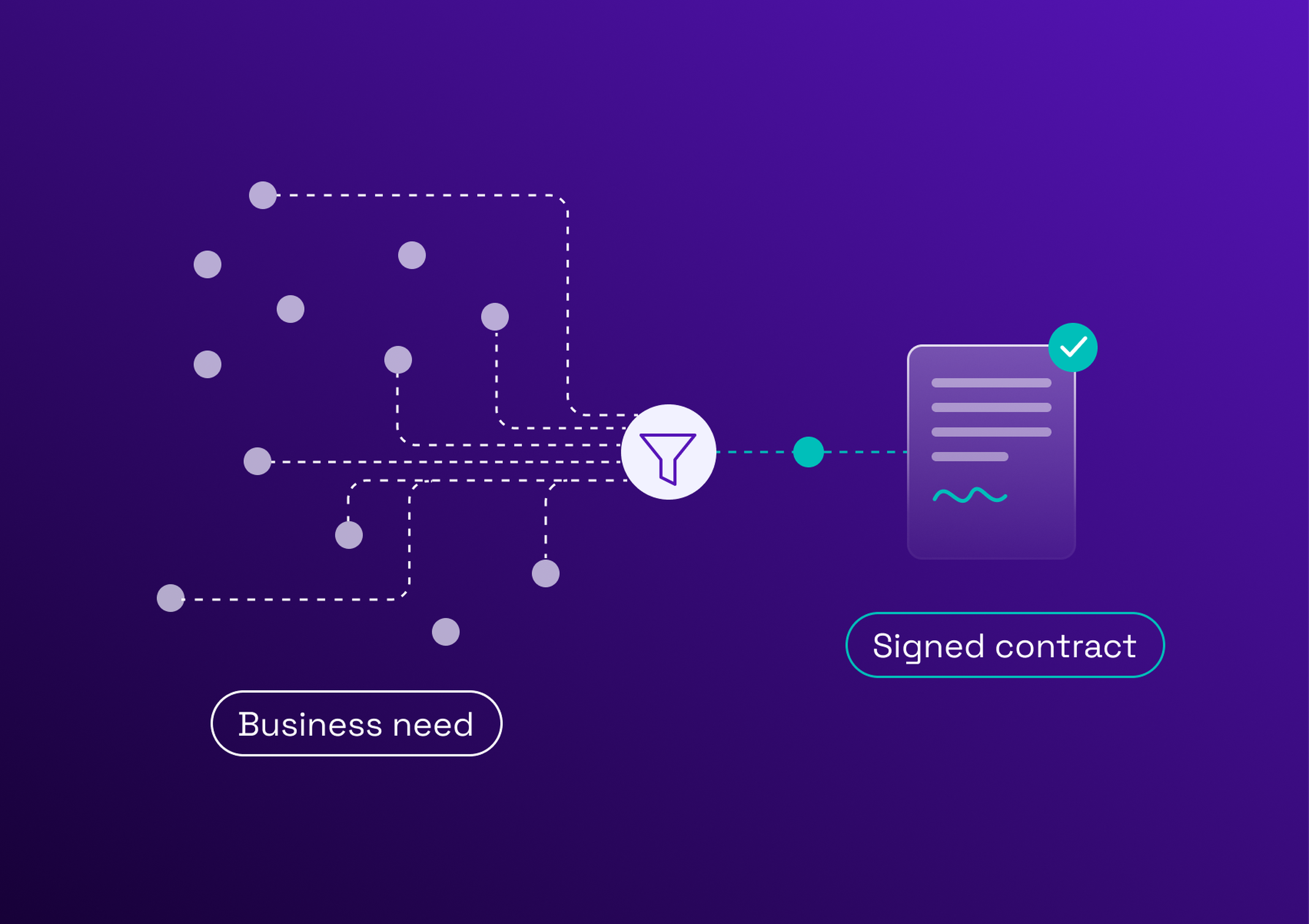
Scope and tier. Define what the supplier will do, what it will access and how critical it is, then place it in a risk tier. The tier decides how deep the next steps go.
Collect the evidence. Send the checklist below, and ask for documents instead of statements. Every check has the evidence it requires.
Verify it. Check the documents at source where you can: the registry, the issuing body, the screening result. A supplier's word is not evidence.
Decide and record. Approve, approve with conditions, or decline, and write down who decided, on what evidence and which conditions apply. This record is what survives an audit.
Set the review dates. Give every document an expiry date and every file a next review. A supplier approved today is only approved as of today.
Vendor due diligence best practices come down to three habits: one checklist for every supplier, a depth that follows the tier, and a recorded decision for each file.
Vendor due diligence checklist: company-level checks
This supplier due diligence checklist covers the company. For each check it gives the evidence to request, the owner and the red flag that should trigger a closer look. Adapt the depth to the supplier's tier.
| Check | Evidence to request | Owner | Red flag |
|---|---|---|---|
Legal identity and beneficial ownership | Registration extract, ownership chart, identity of beneficial owners | Procurement, legal | Owners cannot be identified |
Financial health | Latest accounts, payment record, credit report | Finance | Sustained losses with no funding plan |
Sanctions and litigation | Sanctions screening result, litigation search | Compliance, legal | A sanctions hit, or unexplained litigation |
Insurance | Certificate of insurance with cover amounts and dates | Procurement, risk | Cover below the risk, or expired |
Tax and social contributions | Dated tax and social contribution certificates | Finance, procurement | Certificates refused or out of date |
Security and data handling | Security certifications, DPA, description of access controls | IT security, data protection | Certificates refused or out of date |
Subcontracting policy | Written policy and list of current subcontractors | Procurement, business owner | Refusal to disclose subcontractors |
Ethics and ESG | Code of conduct, anti-corruption policy, ESG statement | Compliance | No policy, or no answer |
What counts as evidence. Accept documents issued by a third party and dated: a registry extract, an insurer's certificate, a certification body's certificate, a screening result. Accept with caution what the supplier writes itself, such as questionnaires and policies, and confirm the key points at source. Do not accept verbal assurances or undated documents. A check without accepted evidence is an open check, not a passed one.
The guide to building an approved vendor list explains how the result of this review turns into an approval.
Checks on the individuals who deliver the work
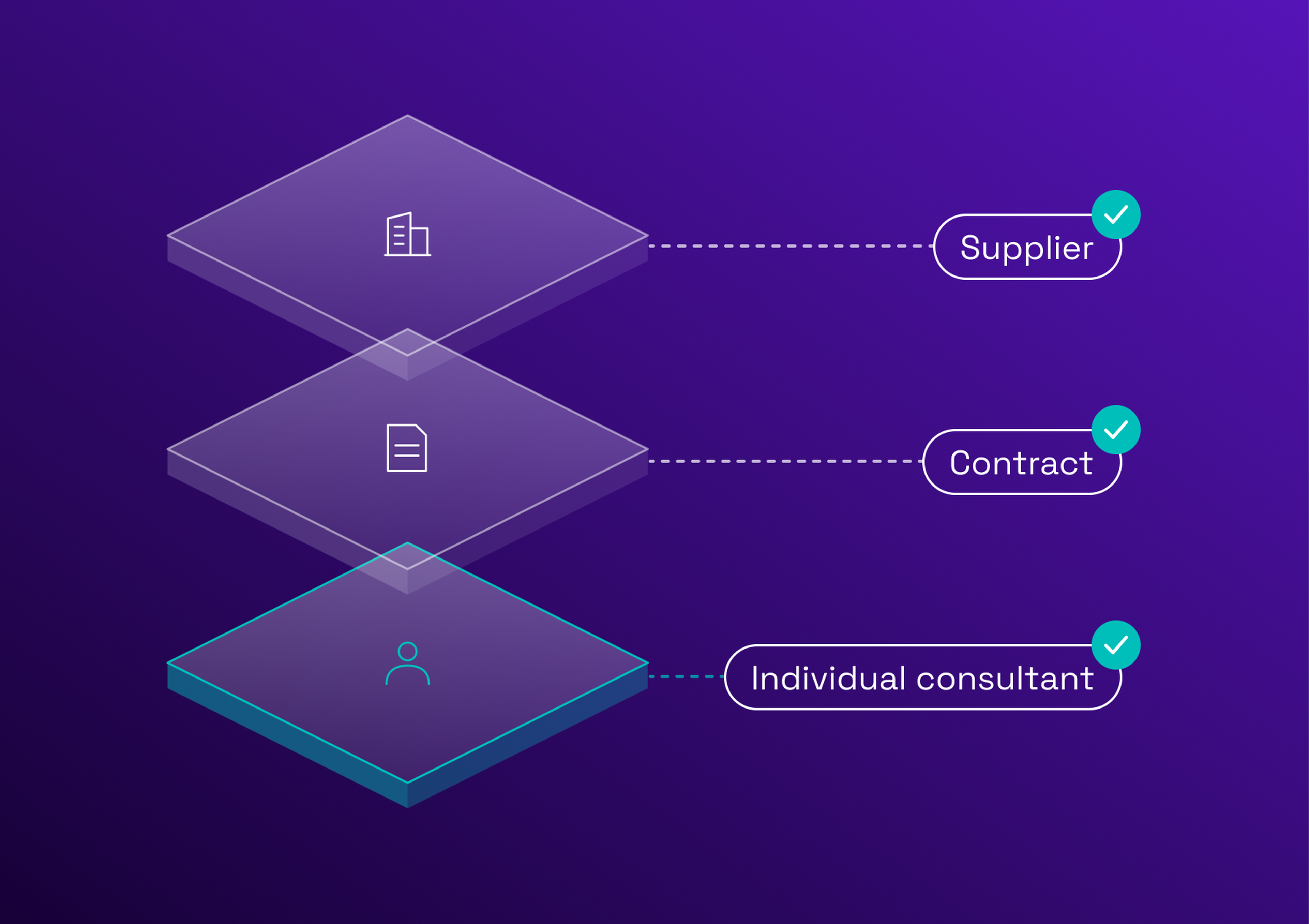
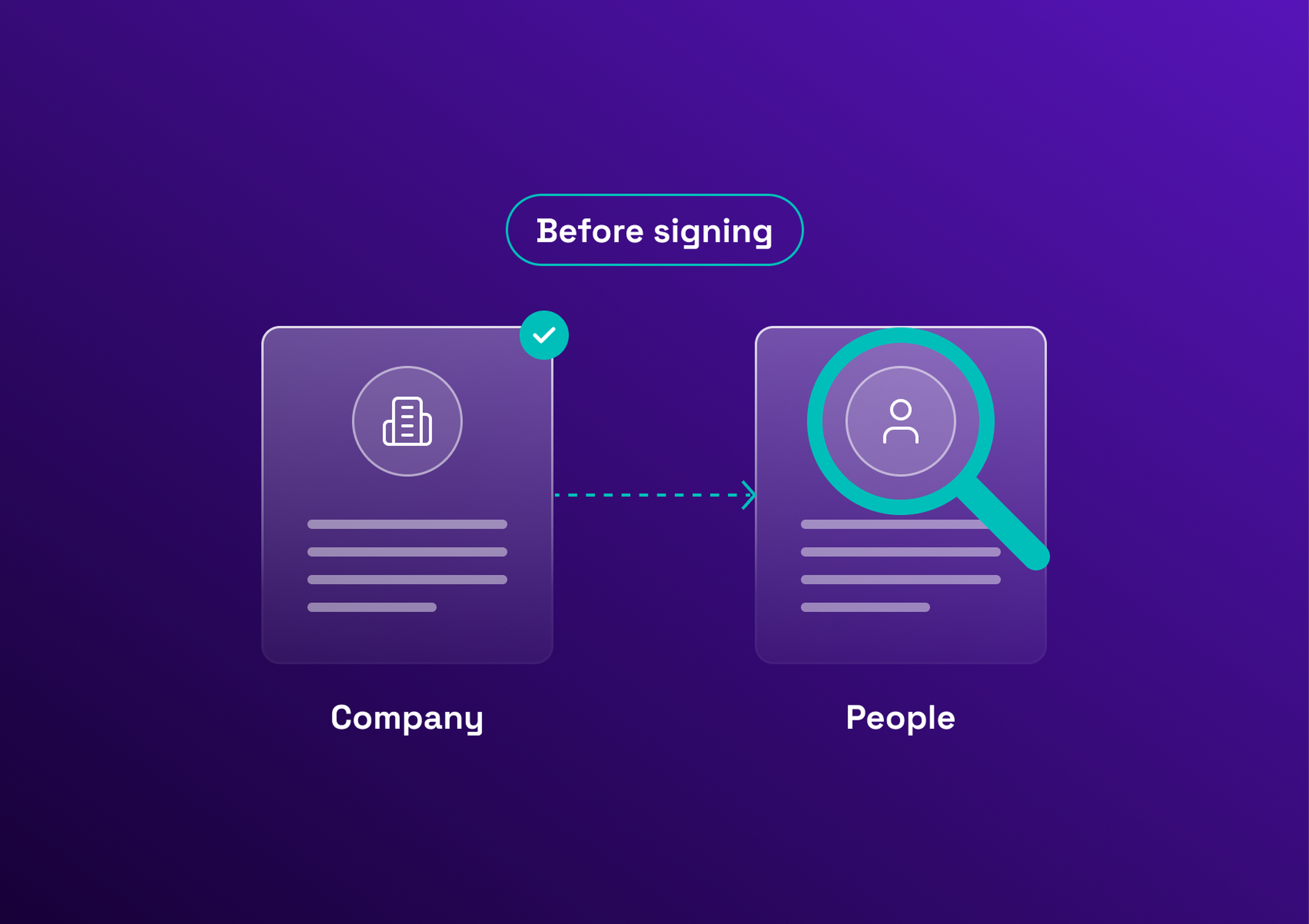
A company can pass every check above and still send someone who should not be on the mission. A supplier with a clean file, for example, can place a consultant whose right to work expires halfway through the engagement. This is the section most guides lack. Contractor due diligence reviews the person, and it is a second review that sits beside the company file.
Identity and right to work. Evidence: an identity document and the right-to-work document that applies in the country of the mission. The supplier provides it, and procurement or HR verifies it.
Qualifications. Evidence: diplomas, certifications or references that match the profile in the statement of work. A profile that cannot be backed up should not be accepted.
Conflicts of interest. Evidence: a signed declaration of any link with your employees, competitors or other suppliers. It matters most for roles that influence a purchase.
Access to systems. Evidence: a request that names the systems and the level of access, approved by the business owner and IT. Access is granted for the mission and removed at its end.
Who really employs the person. Evidence: the employment contract or the contractual chain between the person and the supplier. This is how you spot a subcontractor behind the supplier, or a status that looks like employment. The guide on how enterprises prevent worker misclassification covers the rules by country, and the contractor compliance checklist covers what to keep during the mission.
How much diligence each tier needs
Not every supplier deserves the same review. Risk-based vendor due diligence matches the depth of evidence to the tier. We made a scoring matrix in our third-party risk management guide.
| Tier | Depth of due diligence | What it looks like |
|---|---|---|
High risk | Full review | Documents verified at source, interview, and a review of subcontractors |
Medium risk | Documents verified | Evidence requested and checked, with a short questionnaire |
Low risk | Self-declared | A declaration and a spot check of one or two documents |
Red flags: what stops a deal and what can be fixed
Vendor due diligence red flags do not all weigh the same. Some end the discussion, and others are gaps the supplier can close before signing.
Stop: do not sign
A sanctions hit
A refusal to disclose subcontractors
Documents that look altered or falsified
Beneficial owners who cannot be identified
A person on the mission whose real employer cannot be established
Fix before signing
Expired insurance or tax certificates
A missing DPA or NDA
An incomplete questionnaire
Cover that is below the level of risk
No named owner for the supplier file
Keeping due diligence current after signing
Due diligence is a snapshot, so it needs triggers for a new review. The onboarding review should end by listing them:
Renewal of the contract or of a mission
Change of ownership of the supplier
A new subcontractor in the chain
Wider access to systems or data
An incident, such as a breach, a dispute or a failed audit
Between triggers, the expiry date on each document is the schedule: when a document lapses, the file reopens.
Common vendor due diligence mistakes
Sending the same questionnaire to every supplier, so low-risk suppliers are overloaded and high-risk ones under-checked.
Checking the company but not the people, which leaves the most direct risk unreviewed.
Keeping no record of the decision, so nobody can show who approved the supplier or why.
Letting the business sign before the review is complete, so the findings arrive too late to matter.
How a VMS helps?
A vendor management system gives a central repository for supplier files and documents, expiry alerts, an audit trail for each engagement, and API links to ERP and procurement tools, so the supplier data is not retyped.
Software has limits. It does not decide whether a red flag is a deal-breaker, and it does not replace the checks themselves. Screening, such as sanctions or adverse media checks, depends on the tools connected to it.
Making due diligence repeatable
A checklist only helps if every supplier goes through it the same way. To see where your process stands, assess your procurement maturity. For the earlier stage, the guide on writing an RFP for services shows how to ask suppliers for the right information from the start. This article is general information, not legal advice.
Book a meeting with one of our experts for a personalized demo.