Vendor onboarding is what turns a signed supplier into one that can be staffed, invoiced and paid without exceptions.
A new consultancy cannot staff a project or bill a single day until it is onboarded, so every week of delay is a week the business waits or works around the process. For service suppliers there is a second job: onboarding each consultant the supplier sends. This guide covers both levels, a 7-step process, a checklist you can copy and the KPIs to track.
What is vendor onboarding?
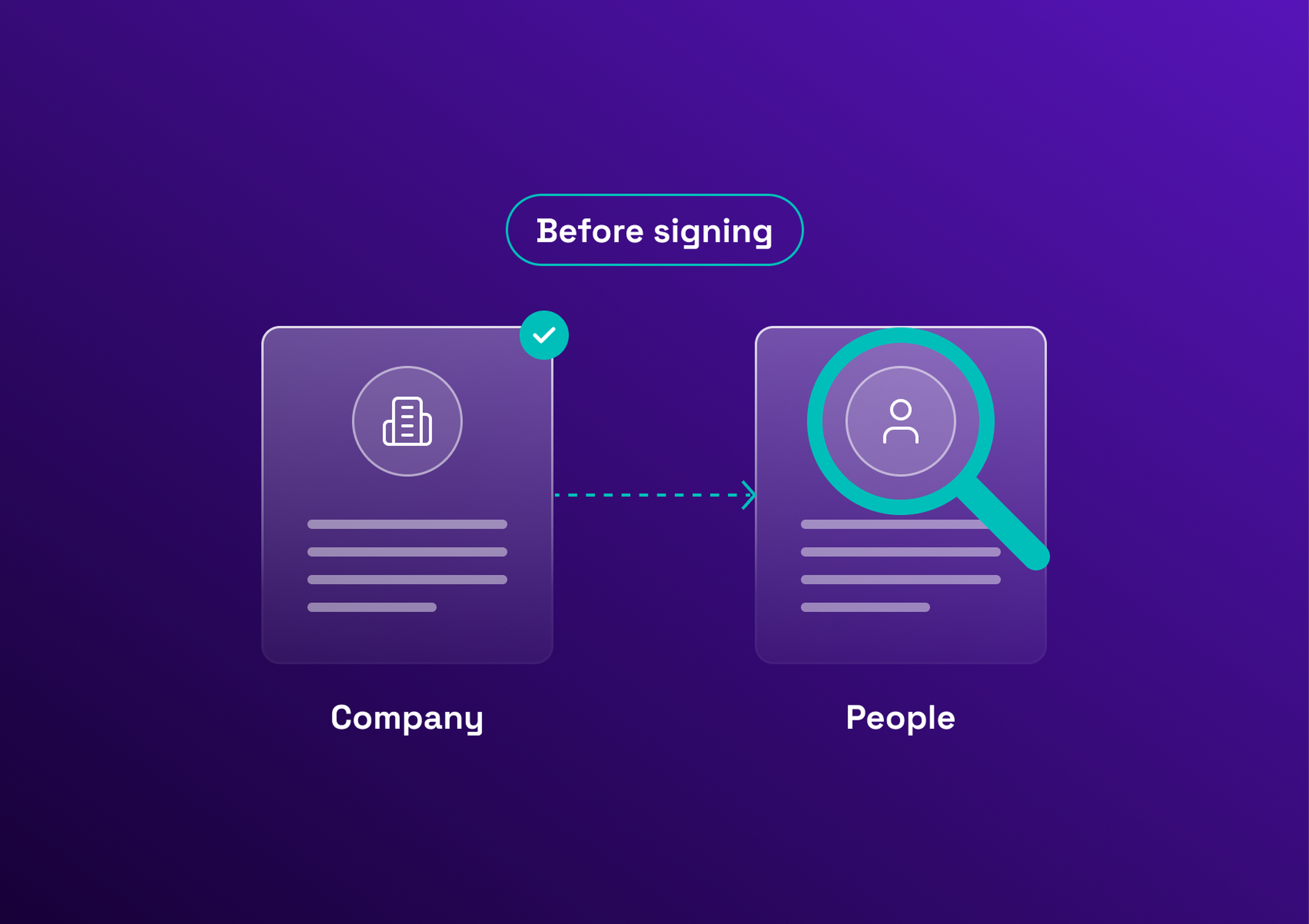
Vendor onboarding is the structured process of qualifying a new supplier and setting it up to work with you. It covers identity checks, a risk review, compliance documents, the contract, system access and payment setup. The goal is a complete, verified file before the first mission starts.
Vendor onboarding is also called supplier onboarding, and the two terms mean the same thing. What changes from one company to another is how much of the process is written down. Where it is not, each request restarts the same questions by email, and the supplier's file lives in several inboxes.
Onboarding is not the same as due diligence or compliance. Due diligence is the review that decides whether to approve a supplier, and it is one step inside onboarding. The vendor due diligence checklist covers it in depth. The documents a supplier must keep valid afterwards are covered in the vendor compliance guide. This article covers the whole path, from request to first billable day.
Vendor onboarding vs supplier onboarding vs consultant onboarding
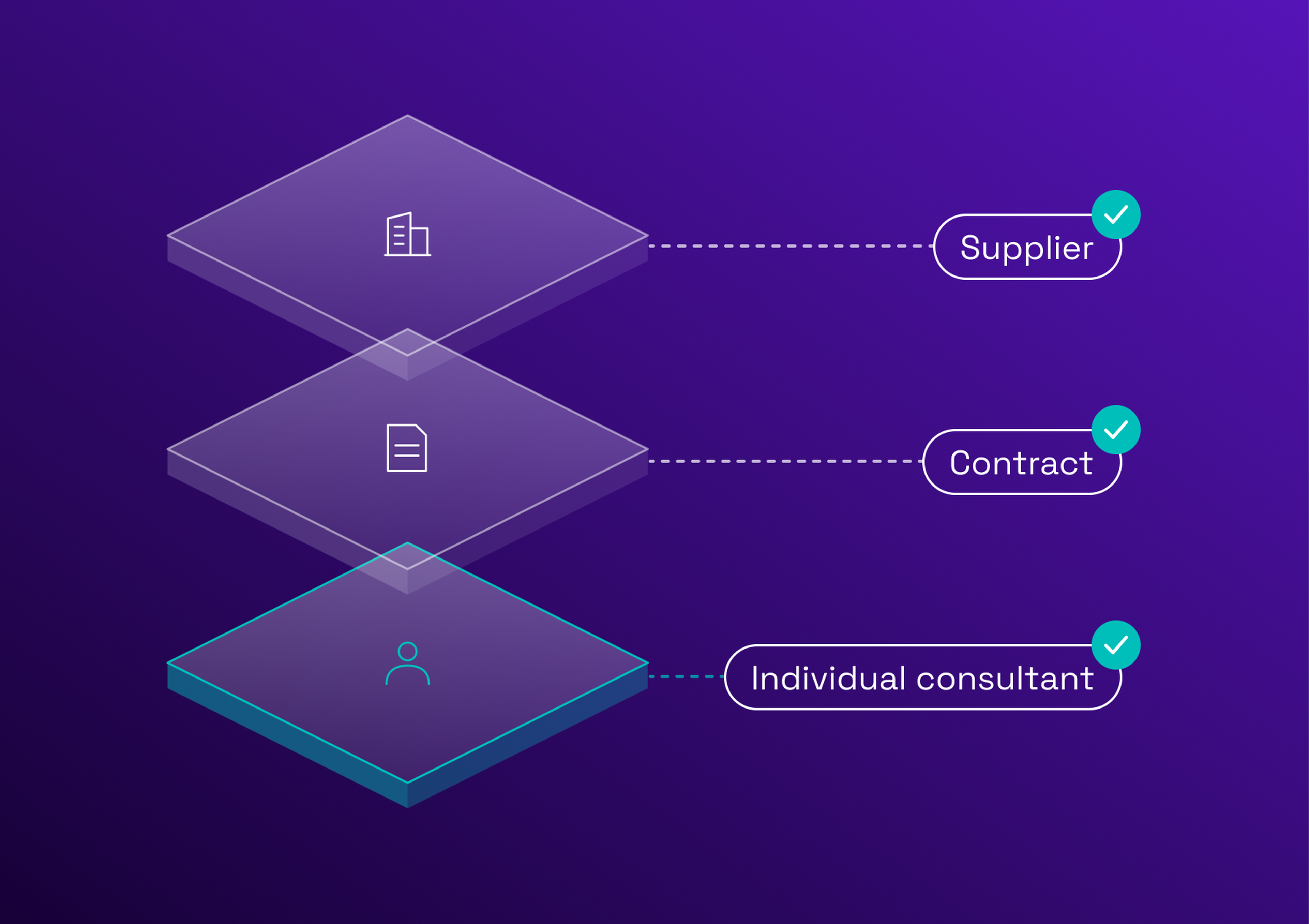
Vendor onboarding and supplier onboarding describe the company level. Consultant onboarding is a different job at a different level, and it is the one most guides leave out. A supplier can be fully onboarded and still send a consultant whose access, right to work or start date has not been set up. The table separates the levels.
| Level | Scope | Who owns it | Key documents |
|---|---|---|---|
Vendor or supplier (the company) | Identity, tax, risk review, insurance, contract, payment setup | Procurement, with finance and legal | Registration extract, tax certificates, insurance certificate, signed contract, bank details |
Subcontractor (second tier) | Approval of any company the supplier uses to deliver | Procurement and the business owner | Written authorization, the same core documents as the supplier |
Consultant (the person) | Right to work, access, start date, timesheet setup | Supplier, business manager and IT | Identity and right-to-work document, access request, signed confidentiality terms |
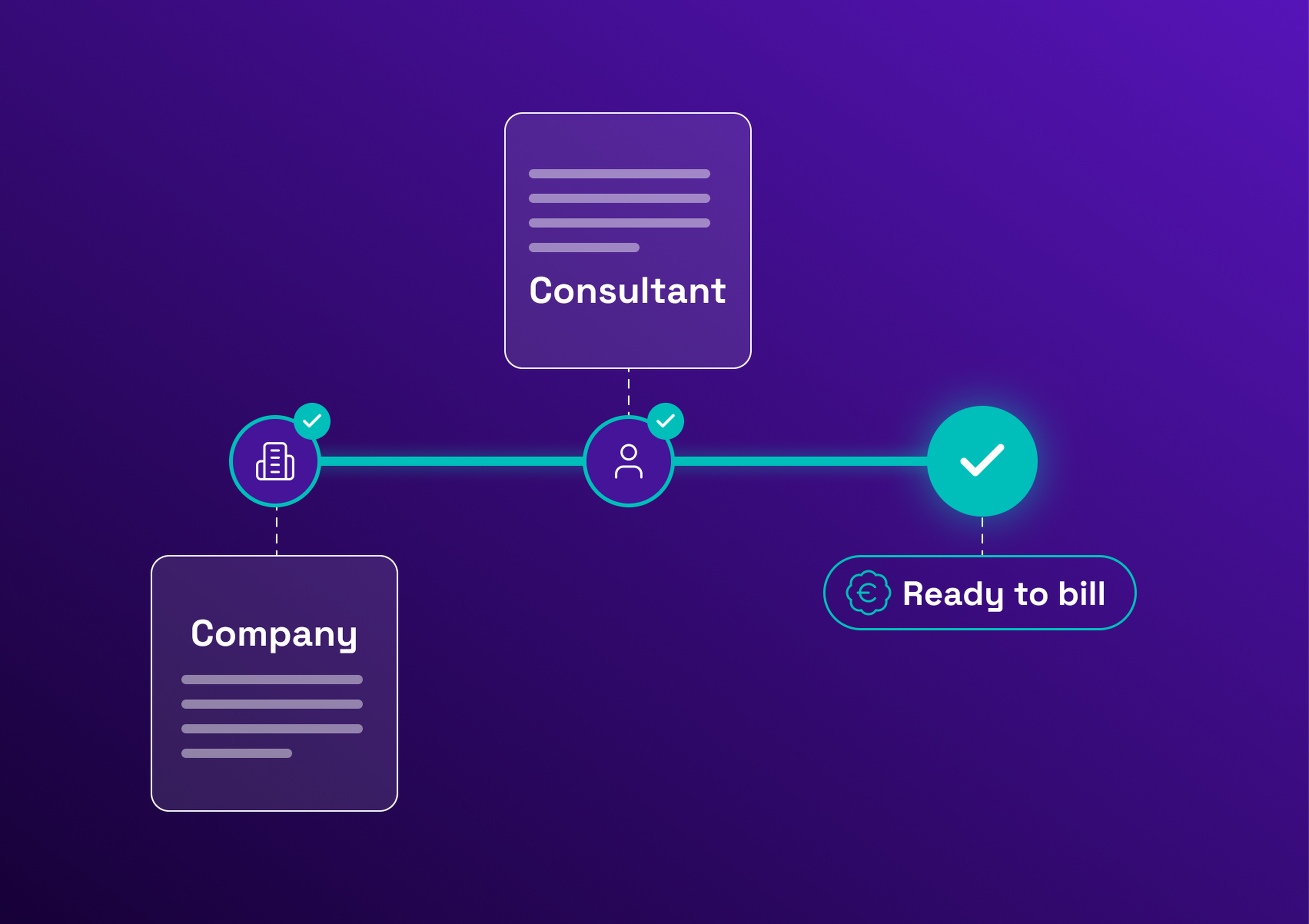
Treat them as two onboardings that run side by side. The company file is done once and kept current. The consultant file is repeated for every person and every mission.
Why service suppliers need a different onboarding process
Onboarding a supplier of goods is mostly about the supplier's business. Third party vendor onboarding for services has to cover what the supplier's people do inside yours.
People work on your premises or in your systems. Each person needs an identity check, access rights and an end date for that access.
Data access is wide. A consultant often sees more of your information than a software vendor's product does.
Pricing models differ. A time-and-materials mission needs rate cards and timesheet approval, while a fixed-price statement of work needs milestones and acceptance criteria.
Worker status can be a risk. A contractor treated like an employee can create legal exposure, and the checks differ by country.
Subcontracting chains are common. The company you onboard may deliver through another company you have never seen.
The scale of third-party exposure is growing. Verizon's 2026 Data Breach Investigations Report found third-party involvement in 48% of the breaches it analyzed, up from 30% in the previous edition. The measure is broad, but it shows why onboarding is where suppliers should be checked first. The third-party risk management guide covers what happens after.
The vendor onboarding process in 7 steps
The vendor onboarding process below runs from the first request to the first billable day. The same supplier onboarding process works for every supplier, and only the depth of the checks changes with the risk.
1. Capture the request and classify the need
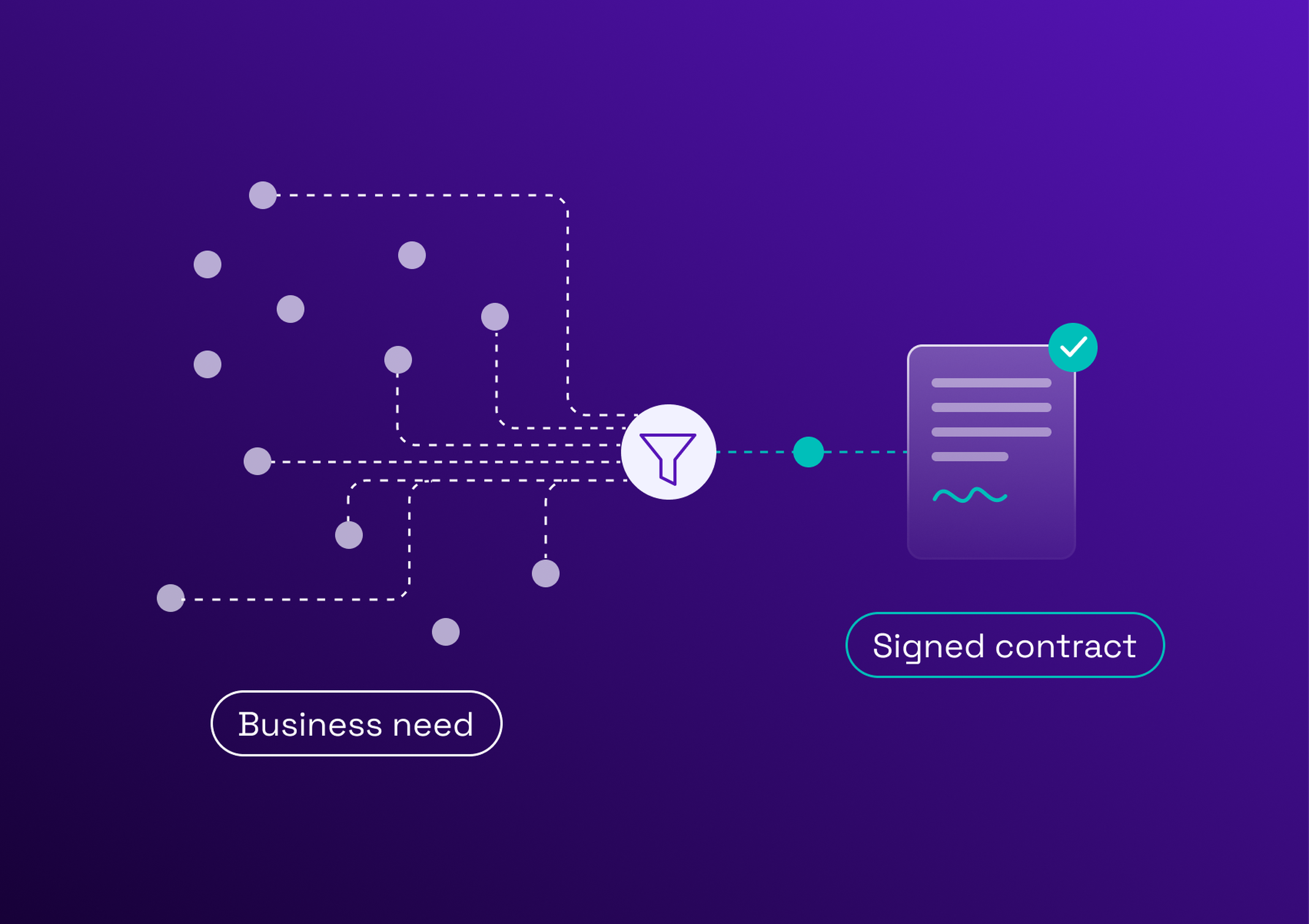
Record who is asking, for which category of service, and under which model: time and materials or fixed price. Name the budget owner and the expected start date. This takes minutes and prevents the most common delay, which is finding out halfway through that the business needs the supplier next week and nobody knows who approves the spend.
2. Tier the vendor by risk
Not every supplier needs the same scrutiny. A supplier risk assessment at onboarding looks at spend, data access, on-site presence, country and how critical the activity is. The result is a tier, and the tier sets the depth of the next steps. The example below is a starting point to adapt.
| Tier | Typical profile | Depth of checks |
|---|---|---|
Light | Low spend, no system access, easily replaced | Core identity, tax and insurance documents |
Standard | Regular supplier, moderate spend, limited access | Light checks plus references, contract and security questionnaire |
Enhanced | System or data access, on-site people, critical service | Standard checks plus full due diligence and individual checks |
The scoring logic belongs in your risk framework, and the third-party risk management guide explains how to build it.
3. Verify legal, tax and financial identity
Check that the company exists and who owns it: registration extract, tax identification and beneficial owners, followed by sanctions screening. For EU suppliers, a tax number can be checked in the VIES system, which confirms that a VAT number is registered. It does not say whether the company is sound. UK numbers are checked with HMRC instead. Finally, verify bank details independently, for example by calling a known contact, because changed bank details are a common route for payment fraud.
4. Run contractor compliance and misclassification checks
This is where service onboarding departs from the goods version. In France, a buyer must obtain the supplier's attestation de vigilance, a social-security compliance certificate, for contracts of €5,000 or more excluding VAT, at signing and then every six months (Urssaf). In the UK, the off-payroll rules known as IR35 can put the status decision on the client (HMRC guidance). Germany and the US have their own tests for disguised self-employment and joint employment. Also approve any second-tier subcontractor before it starts. The contractor compliance and worker misclassification guides give the detail. This is general information, not legal advice, and legal counsel should review this step.
5. Secure data, IT access and insurance
Where the supplier will handle personal data, sign a data processing agreement under Article 28 of the GDPR. Send a security questionnaire sized to the tier, and ask for certifications as evidence rather than statements. Collect the professional liability insurance certificate and check that the cover amount fits the risk of the work and that the dates are current.
6. Contract and add the vendor to your approved list
Put the commercial terms in place: a master service agreement for the standing terms, a rate card for prices by profile, and a statement of work for each project. Only then add the supplier to the approved vendor list or to the right panel, with its scope: which categories, which countries and who can engage it.
7. Set the vendor up in your systems and onboard its consultants
Create the vendor record in the ERP, give the supplier access to your supplier portal or process, and set up payment. Then run the consultant onboarding for each person: identity and right-to-work check, access to systems, start date and timesheet setup. The timesheet approval guide covers how to keep the first billing cycle clean.
Vendor onboarding checklist
Use this vendor onboarding checklist as the working list for each new supplier. Keep what applies to the tier, and drop the rest.
Identity
Registration extract or certificate of incorporation
Legal entity name and contracting entity confirmed
Beneficial owners identified
Sanctions screening result on file
Tax
Tax identification number and EU VAT number validated
Tax compliance certificate, where the country requires one
Withholding or reporting forms, where relevant
Social and labor
Social-security compliance certificate (for example, the French attestation de vigilance)
Status checks for individual contractors
Written approval of subcontractors
Data and security
Signed data processing agreement
Security questionnaire and certifications
Confidentiality terms signed
Insurance
Professional liability certificate with cover amount and dates
Expiry dates recorded for follow-up
Commercial
Master service agreement signed
Rate card agreed
Statement of work or work order template accepted
Supplier added to the approved list or panel
Systems
Vendor record created in the ERP
Bank details verified independently
Portal or process access granted
Consultant access, start date and timesheet setup done
How long should vendor onboarding take? KPIs to track
No authoritative benchmark exists for how long onboarding takes, and a figure from one company says little about another. Duration depends mostly on tier and on how quickly suppliers return documents. What can be compared is your own speed over time.
At Amadeus, supplier registration went from 5-8 weeks to 2 weeks, as published on the Amadeus client page. It is one company's result, not a benchmark, but it shows that the time is mostly waiting, and that waiting can be cut. These KPIs measure it. The targets are examples to adapt.
| KPI | Definition | Example target |
|---|---|---|
Onboarding cycle time | Working days from request to supplier approved | Short for the light tier, longer for enhanced |
First-time-right rate | Submissions complete on the first pass ÷ submissions received | Rising quarter after quarter |
Share of documents expired | Expired documents ÷ documents on file | Close to zero for active suppliers |
Time to first billable day | Days from request to the first day a consultant can bill | Tracked by tier and by supplier |
Cycle time is the supplier onboarding KPI to start with. First-time-right rate shows whether your requests are clear, since suppliers resubmit when they do not know what is expected.
Common vendor onboarding mistakes
These are the points where vendor onboarding best practices are most often missing.
One-size-fits-all checks. Treating a stationery supplier and a consultancy with system access alike either overloads the first or under-checks the second.
Documents chased by email. Requests, reminders and files scatter across inboxes, and nobody can say what is missing.
No plan to re-verify. A document valid at onboarding expires later, and the supplier looks compliant when it is not.
Onboarding the company but not its consultants. The supplier is approved, and the person who arrives has no access, no timesheet and no checked status.
Letting work start before approval. The business signs a statement of work first, and the findings arrive too late to matter.
Automating vendor onboarding with a VMS
Vendor onboarding software does not decide who to approve, but it removes the manual work around the decision. For service suppliers, a VMS typically supports four things:
Supplier self-service. Suppliers submit their own documents through a portal, so nobody retypes them.
Document expiry alerts. Each document carries a date, and a reminder fires before it lapses.
Panel management. Approved suppliers sit in the right category, with their rate cards, and dynamic supplier listing keeps the ranking current.
Integrations. Supplier data flows to the ERP and procurement tools by API, so the vendor record is not rebuilt.
Software has limits. It does not verify a document by itself or decide whether a red flag is acceptable, and screening depends on the tools connected to it. See how Eleven VMS handles supplier setup.
From a manual process to a repeatable one
A written process, a tiered checklist and a few KPIs fix most onboarding delays before any tool is involved. To see where your process stands, assess your procurement maturity, or estimate your VMS ROI. This article is general information, not legal advice.
Book a meeting with one of our experts for a personalized demo.